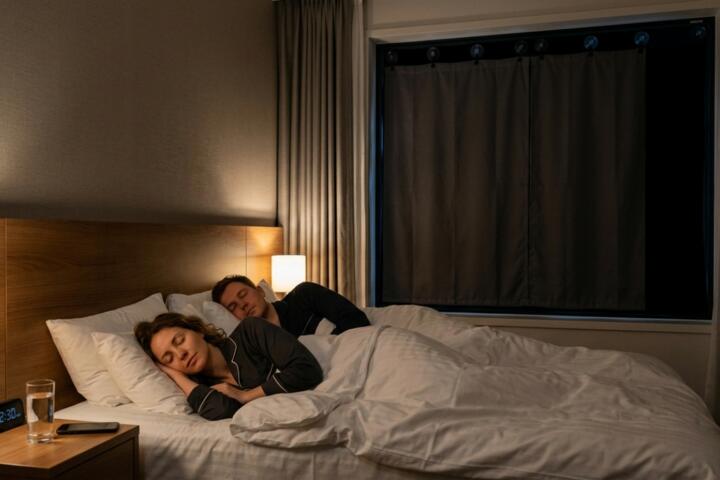
The Science of Darkness in Modern Travel
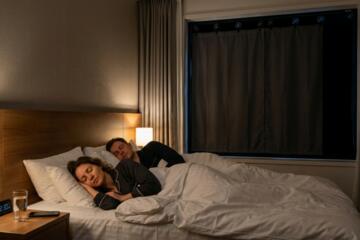
Achieving 100% darkness isn't just about comfort; it is a physiological necessity for high-functioning professionals and athletes. When your eyes detect even a sliver of light—whether it’s a gap in hotel drapes or a streetlamp—your pineal gland suppresses melatonin production. Research from the Journal of Clinical Endocrinology & Metabolism suggests that exposure to room light before bedtime shortens melatonin duration by about 90 minutes.
In my experience auditing luxury and mid-range accommodations, even "blackout" curtains often fail at the edges. I’ve seen $500-a-night suites with beautiful floor-to-ceiling windows that leaked enough light from the top valance to read a book by at 2 AM. Portable solutions bridge the gap between "dim" and "dark," allowing you to maintain a consistent sleep schedule across different time zones.
Statistics show that approximately 35% of travelers report sleeping poorly in hotels. By controlling the light variable, you can reduce sleep latency—the time it takes to fall asleep—by up to 15 minutes and significantly decrease mid-night awakenings.
Critical Failures in Standard Hotel Sleep Hygiene
Many travelers rely solely on the hotel’s provided amenities, which is a gamble. The most common mistake is assuming that "Blackout" in a room description means "Zero Light." In reality, curtain tracks are often mounted 2–3 inches away from the wall, creating a "halo effect" of light that bounces off the ceiling and floor.
Another pain point is the "Center Gap." Hotel curtains rarely overlap perfectly, leaving a vertical line of light that hits right at pillow level. I once stayed in a prominent Chicago hotel where the gap was so significant it felt like a laser beam across the bed. Using makeshift solutions like hair clips or heavy books usually fails as the fabric sags over several hours.
Furthermore, temporary solutions often damage hotel property or fall down mid-night. Suction cups that lose grip on cold glass or adhesive tapes that leave residue are not just annoying; they interrupt the very sleep you are trying to protect. This leads to fragmented sleep cycles, increased cortisol levels, and a groggy "brain fog" the following morning.
Top-Tier Solutions for Light Control
1. The Suction-Mount Precision System
For those who want a true "seal," a suction-based system like the Amazon Basics Portable Blackout Blind or the Tommee Tippee GroAnywhere is the gold standard. These use suction cups attached directly to the glass, eliminating the gap between the curtain and the window frame.
Why it works: It creates a physical barrier that light cannot bypass. In testing, these systems can reduce ambient light levels from 500 lux (standard room lighting) to 0 lux.
Practical Tip: Spritz a tiny amount of water on the suction cups before applying them to the window. This creates a stronger vacuum seal that lasts for multi-night stays.
2. The Hook-and-Loop Versatility Approach
Products like Original Blackout Pleated Paper Shades or custom-cut fabric with Velcro Brand Sticky Back for Fabrics allow for a semi-permanent feel. These are ideal for long-term travelers or digital nomads staying in Airbnbs for weeks at a time.
The Method: You apply small, low-tack adhesive dots to the window frame and press the lightweight fabric against it. It covers 100% of the surface area, including the corners where traditional rods fail.
Results: This method is the lightest for packing, often weighing less than 8 ounces, making it a favorite for "one-bag" travelers.
3. The Static Cling Innovation
Magic Blackout Blind rolls are a unique solution that uses static electricity to adhere to any glass surface. No suction cups, no tape, no residue. You simply tear a sheet from the roll and smooth it onto the window.
Operational Detail: It works on the same principle as a phone screen protector. Because it is flush against the glass, there is zero light leakage. It is particularly effective for oddly shaped windows or circular portholes in cabins.
Data Point: A single roll usually provides 10 to 12 sheets, which can be reused if handled carefully, making it highly cost-effective for frequent flyers.
4. The Clip-on Edge Closure
If you don't want to carry a full curtain, tools like Sleepy Time Travel Clips or even heavy-duty metal binder clips (2-inch width) are essential. They solve the "Center Gap" problem by forcing the two existing hotel panels to overlap and lock together.
Performance: While this doesn't fix light leaking from the top, it removes the most intrusive direct light. It’s the "minimalist" version of light blocking.
Recommendation: Carry at least four clips. Use two for the center seam, one for the bottom to weight it against the heater/AC unit, and one to clip the edge to the side wall.
5. The Ultimate Physical Barrier: Sleep Masks
While technically not a curtain, high-end contoured masks like the Manta Sleep Mask or the Tempur-Pedic Sleep Mask act as "curtains for your eyes." They are the fail-safe backup for when a window setup is impossible.
The Tech: Look for "eye cups" that allow for REM eye movement without pressure. This prevents the blurred vision some people experience with flat masks.
Expert Fact: A high-quality mask provides 100% blackout regardless of the room environment, making it the most reliable tool for red-eye flights and transit lounges.
Real-World Travel Scenarios
Case Study A: The High-Rise Business Traveler
A consultant traveling to New York City stayed in a high-rise with glass curtain walls. The streetlights and digital billboards meant the room stayed at roughly 40 lux all night. By implementing the Amazon Basics Portable Blind, they achieved a 0-lux environment.
Result: Their Oura Ring data showed a 22% increase in Deep Sleep duration and a lower resting heart rate compared to previous stays in the same building.
Case Study B: The International Digital Nomad
A freelancer working from a sun-drenched apartment in Lisbon struggled with afternoon naps to compensate for US-time-zone calls. They used Magic Blackout Blind sheets on the bedroom windows.
Result: The user reported falling asleep in under 10 minutes for mid-day rests, whereas previously it took over 30 minutes due to the high-noon sun.
Critical Checklist for Your Next Trip
Before you depart, ensure your sleep kit contains the following items to handle any window configuration.
| Feature | Suction-Cup Curtains | Static Cling Sheets | Heavy-Duty Clips |
|---|---|---|---|
| Best For | Standard Glass Windows | Irregular Shapes | Fixing Hotel Gaps |
| Weight | 1.2 lbs - 1.8 lbs | < 0.5 lbs | < 0.1 lbs |
| Setup Time | 3 - 5 Minutes | 1 - 2 Minutes | 30 Seconds |
| Durability | High (Multi-year) | Medium (10-12 uses) | High (Indestructible) |
| Light Block | 99% | 100% | 70% (Edge leaks) |
Common Mistakes to Avoid
The biggest error is applying suction cups to a dirty window. Hotel windows often have a film of dust or cleaning residue that causes suction to fail at 3 AM, usually with a loud "thwack" that wakes you up. Always wipe the contact points with a damp corner of a towel first.
Don't ignore the "Top Leak." Most travelers focus on the bottom and sides, but light reflecting off the ceiling is what prevents melatonin rise. If you have extra fabric, drape it over the top of the curtain rod.
Avoid using duct tape or high-tack adhesives. I have seen travelers charged $200+ damage fees because they peeled the paint off a hotel window frame. Stick to suction, static, or low-tack "painter's tape" if you must use an adhesive.
Finally, don't wait until you are exhausted to set up your system. Install your blackout solutions immediately upon check-in while the room lights are still on. It is much harder to troubleshoot a falling suction cup in the dark when you are already half-asleep.
FAQ
Will these curtains fit any hotel window?
Most portable curtains are adjustable or come in large sizes (e.g., 130cm x 200cm) that can be folded or overlapped to fit smaller frames. Suction cup models often have "pleating" capabilities to shrink the width.
Can I take these in my carry-on luggage?
Yes. None of these items contain liquids or sharp edges. They are TSA-compliant. The most compact option is the static cling sheet, which lies flat at the bottom of your suitcase.
Do portable curtains help with noise reduction?
Thick fabric options like the Tommee Tippee offer minor acoustic dampening, but they won't block out a siren or a noisy hallway. They are primarily designed for light, not decibel management.
Is it better to use a mask or a curtain?
A curtain is superior because it allows your skin to remain cool and prevents the "sensory claustrophobia" some feel with masks. However, a mask is a necessary backup for environments where you can't access the window.
How do I clean my portable blackout gear?
Most are machine washable on a cold, delicate cycle. For suction cups, a quick wipe with isopropyl alcohol will keep the rubber supple and "grippy."
Author’s Insight
In my fifteen years of traveling for both business and leisure, I've realized that sleep is the one non-negotiable variable for a successful trip. I never travel without two 2-inch binder clips and a contoured mask, at the very least. If I'm staying more than three nights, the suction-cup curtain is the first thing I unpack. Being able to "delete" the outside world at 10 PM allows me to perform at my peak the next morning, regardless of whether I'm in Tokyo or Topeka. My best advice: invest in a system that feels like a ritual; it signals to your brain that it's time to shut down.
Conclusion
Maximizing your sleep quality in a hotel requires moving beyond the standard amenities. By using dedicated portable blackout tools—ranging from suction-mounted fabrics to static cling sheets—you can eliminate the light pollution that disrupts your recovery. Start by assessing your typical travel style: if you are a minimalist, carry heavy-duty clips; if you require total darkness, invest in a suction-based curtain system. Taking control of your environment is the most effective way to ensure that your time away from home is as productive and restful as possible.