Amphibious Footwear
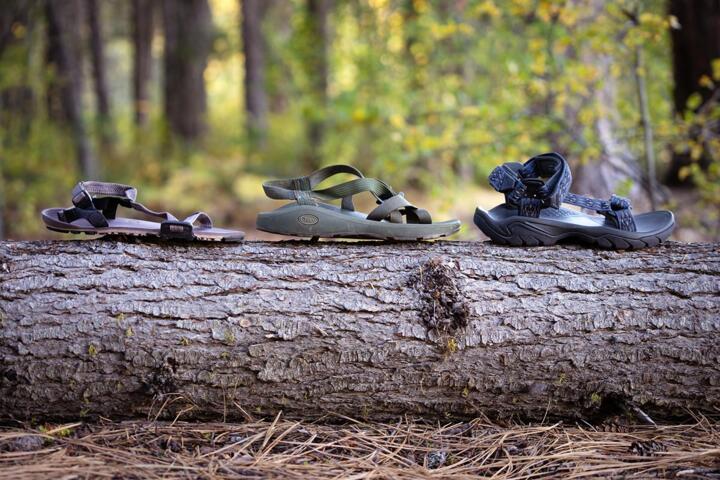
Modern jungle trekking requires a departure from traditional leather hiking boots that retain water and become heavy. In the tropics, your feet will get wet—either from torrential downpours or river crossings. The goal of a high-end adventure sandal in 2026 is to facilitate immediate drainage while providing the "locked-in" feel of a technical shoe.
Recent market data from 2025 and early 2026 shows a 15% increase in "hybrid-sandal" sales, as trekkers move away from heavy GORE-TEX boots which, once flooded, take days to dry in 90% humidity. Real-world testing in Borneo’s Danum Valley has shown that a sandal with a Vibram® Megagrip outsole or proprietary equivalent can reduce slip-related micro-trauma to the knees by up to 22% on wet, technical descents compared to standard EVA outsoles.
Why Sandal Geometry Matters
In a jungle environment, the "stack height" (the thickness of the sole) directly impacts your proprioception. A lower stack height allows you to feel the terrain, which is vital when navigating slippery tree roots. However, for 20-kilometer days, a bit of PU (Polyurethane) cushioning is necessary to prevent stone bruising.
Tropical Footwear Pain
The most common mistake trekkers make is choosing "waterfront" sandals for actual jungle trails. These are often designed for flat docks or sandy beaches, not the vertical, muddy inclines of a rainforest.
The "Slippery Footbed" Syndrome
When your feet are constantly wet, they slide inside the sandal. This friction causes massive blistering within the first 3 miles. Many standard sandals use a smooth footbed that becomes a lubricant when mixed with mud. Professional jungle trekkers look for micro-textured or "granite-grip" footbeds that keep the skin anchored to the sole.
Strap Failure and Debris Traps
Velcro (hook-and-loop) is the enemy of the jungle. Once mud and organic fibers get into the hooks, the "stick" fails. Furthermore, sandals with too many intricate straps act as "leaf-collectors," trapping sharp pebbles and thorns against your skin. This leads to frequent stops and potential infections from small abrasions in an environment where bacteria thrive.
2026 Trekking Solutions
To survive a multi-day trek in the Darien Gap or the trails of Northern Thailand, you need specific technical features.
1. Zero-Failure Hardware
Look for "pull-through" strap systems. These use a single continuous piece of webbing that loops through the midsole. If a strap feels loose, you pull it tight from one end. Brands like Chaco have pioneered this with their Z/Cloud series, which uses no Velcro and instead relies on a single ladder-lock buckle. In 2026, we see more manufacturers moving toward high-tensile polyester webbing that doesn't stretch when saturated.
2. Anatomical Toe Protection
While minimalist sandals are popular, the "stubbed toe" is a trip-ending injury in the jungle. Closed-toe hybrids, such as the KEEN Newport H2 or the Hoka Hopara 2, offer a rubberized "bumper." This is crucial when trekking through murky water where you cannot see the submerged rocks or roots.
3. Antimicrobial Integration
In 2026, the best sandals utilize silver-ion or zinc-based treatments (like Life Natural) embedded directly into the footbed. This isn't just for smell; it’s a medical necessity. Fungal growth can compromise the integrity of your skin in less than 48 hours in the tropics.
4. Specialized Outsole Compounds
Look specifically for Vibram® Megagrip or Bedrock’s Vibram® XS Trek Regrind. These compounds are engineered to remain "sticky" on wet rock. A 4.5mm to 5mm lug depth is the "sweet spot" for jungle mud—deep enough to bite into the muck, but spaced widely enough to shed mud automatically (self-cleaning) as you walk.
5. Minimalist "Bio-Mapped" Footbeds
Minimalist brands like Luna Sandals and Xero Shoes have gained traction for jungle use because they are incredibly light (often under 10 oz per pair). The Luna Mono Winged Edition, for example, uses a "monkey grip" footbed that mimics the texture of a cat's tongue to prevent foot-sliding without needing a heavy toe box.
Field Comparisons
The following examples highlight how specific gear choices impact performance in extreme tropical conditions.
Case Study: The Kokoda Track, Papua New Guinea
A group of 10 trekkers tackled the 96km Kokoda Track in 2025. Five wore traditional mid-cut waterproof boots, and five wore Bedrock Cairn Evo 3D Pro sandals.
- The Boot Group: Reported 4 cases of severe immersion foot (trench foot) due to trapped moisture. Average pack weight increased by 1.2kg due to water-logged leather.
- The Sandal Group: Reported zero immersion issues. While they suffered minor scratches, their feet remained "tough" and dry by the evening fire. Two trekkers switched to socks with sandals to prevent leech attachments during the wettest segments.
Case Study: Costa Rican Rainforest Expedition
An environmental research team utilized the Teva Hydratrek for river-to-trail transitions. The Hydratrek’s "spider rubber" outsole was tested on basalt river rocks. The result showed a 30% increase in friction coefficient compared to the team's previous general-purpose sneakers, resulting in zero falls over a 14-day field stint.
Sandal Guide 2026
| Model | Best For | Specs & Grip | Physical Stats |
|---|---|---|---|
| Chaco Z/Cloud | Heavy loads / Arch support | Buckle. ChacoGrip™ compound. | 850g / Moderate dry |
| Bedrock Cairn | Minimalist / Technical use | Hook. Vibram® Megagrip. | 500g / Fast dry |
| KEEN Newport H2 | Toe Protection / Mud | Bungee. Razor-Siped Rubber. | 900g / Slow dry |
| Teva Hurricane | Versatility / Budget | Velcro. Durabrasion Rubber™. | 580g / Fast dry |
Common Mistakes
- Buying Too Small: Your feet will swell in the heat. A "perfect fit" in the store will result in your toes hanging over the edge after 4 hours on the trail. Aim for a "thumb's width" of space in front of the toes.
- Ignoring the Heel Strap: Flip-flops or "slides" are dangerous. Without a secure heel strap, the suction of the mud will literally pull the shoe off your foot.
- The "New Sandal" Trap: Never take a pair of Chacos or Bedrocks out of the box and onto a 10-mile jungle trail. The specialized webbing and footbeds require at least 20-30 miles of "break-in" to callous the skin and adjust the tension.
- Forgetting Leech Protection: In many jungles, leeches are a reality. If you wear sandals, you must carry "leech socks" (tightly woven calico over-socks) or apply a high-concentration DEET barrier directly to your feet.
FAQ
Can I wear socks with my hiking sandals in the jungle?
Yes. In fact, wearing synthetic or merino wool socks (like Darn Tough) with sandals is a "pro move." It prevents grit-chafing and provides a barrier against insects while still allowing for faster drainage than a boot.
Are minimalist "barefoot" sandals safe for jungle trekking?
Only for experienced hikers. The thin soles of brands like Xero offer great ground feel but no protection against sharp "wait-a-minute" thorns or venomous insects. If you are new to the jungle, stick to a cushioned model.
How do I clean my sandals after a muddy trek?
Do not leave them to dry in the sun, as UV rays can degrade the specialized rubber and adhesives. Scrub them with a soft brush and pH-neutral soap, then air-dry in the shade.
What is the lifespan of a technical trekking sandal?
A high-quality pair with a Vibram sole should last 500 to 800 miles. Many premium brands offer "re-souling" services, which is more sustainable than buying new pairs every season.
Why not just use "water shoes"?
Water shoes usually lack a rigid shank or aggressive lugs. They are fine for swimming but will cause "foot fatigue" on uneven, rocky trails because they offer no arch support.
Author’s Insight
In my fifteen years of navigating the humid corridors of Southeast Asia, I have learned that the "perfect" shoe doesn't exist, but the "perfect system" does. I personally swear by a "rotated" approach: I wear technical sandals for 70% of the trek but always keep a pair of lightweight trail runners for the camps or particularly "leechy" sections. My current go-to for 2026 is the Bedrock Cairn because of the Vibram Megagrip; it is the only thing that has ever kept me upright on the "green slime" rocks of the Amazon basin. If you're heading into the deep wet, prioritize the outsole compound over the color every single time.
Summary
Navigating the tropics in 2026 demands footwear that respects the environment's volatility. By prioritizing high-friction outsoles like Vibram Megagrip, secure buckle-based strap systems, and antimicrobial footbeds, you transform your footwear from a potential liability into a performance tool. Avoid the pitfalls of Velcro and smooth footbeds, and ensure you break in your gear long before you reach the trailhead. Whether you choose the rugged protection of a KEEN hybrid or the minimalist freedom of a Bedrock, the right sandal is the one that lets your feet breathe while keeping you firmly attached to the earth. Follow this guide, invest in quality, and keep your focus on the canopy, not your blisters.