The Reality of Saharan Logistics
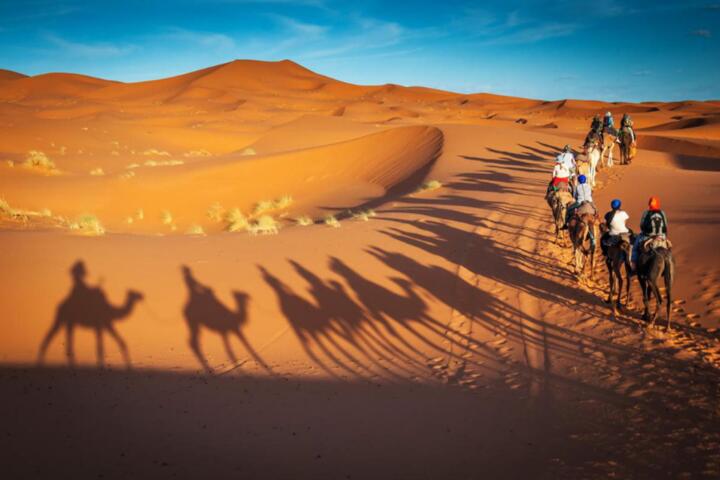
The Sahara is not merely a "hot place"; it is a landscape of violent thermal swings where ground temperatures can hit 70°C, yet drop to near freezing after dusk. Survival here isn’t about "toughing it out"—it’s a data-driven exercise in moisture retention and caloric management. Unlike temperate forests, the desert offers zero margin for mechanical or physical failure.
Practitioners must understand the "Dehydration Myth": many believe they can ration water by sipping. In reality, your body requires a specific volume to maintain blood pressure and kidney function. In the 1994 Marathon des Sables, Mauro Prosperi famously survived nine days lost in the desert, but only by utilizing extreme resourcefulness after losing his way in a sandstorm. Modern expeditions use tools like the Garmin inReach Mini 2 to ensure that "lost" never becomes "fatal."
Statistical reality: At 40°C, an active hiker loses roughly 1 to 1.5 liters of sweat per hour. Without replenishment, clinical dehydration sets in within 4 hours, leading to cognitive decline that prevents rational decision-making.
Critical Failure Points in Desert Preparation
The most common mistake is over-reliance on technology without understanding environmental physics. Travelers often pack "breathable" synthetic gym wear, which actually accelerates sweat evaporation too quickly, leading to rapid electrolyte depletion. True desert experts favor loose-fitting, high-density weaves that create a micro-climate against the skin.
Another pain point is the "Cooling Paradox." People drink ice-cold water, which causes the stomach to cramp and slows absorption. Furthermore, many underestimate the "Sand Tax"—the way fine Saharan dust (often under 10 microns) infiltrates electronics, camera seals, and engine air filters. Ignoring pre-cleaners like those from Donaldson or K&N on vehicles leads to total engine seizure in the middle of the Erg Chebbi.
In 2018, a tourist group in Algeria suffered a double-vehicle breakdown. They had plenty of food but lacked a secondary communication method when their SAT phone battery failed in the heat. They were found only after a three-day search. The lesson: heat kills batteries as efficiently as it kills humans.
Strategic Solutions for Arid Environments
Advanced Hydration Systems and Electrolyte Science
Water is heavy (1kg per liter), but in the Sahara, you must carry a minimum of 6–8 liters per person, per day. Instead of standard plastic bottles, use MSR Dromedary bags. These are made of 1000-denier fabric that resists punctures and UV degradation.
To manage hydration, use the Precision Hydration protocol. It’s not just about H2O; it’s about sodium. If you drink massive amounts of water without replacing the 500mg–1500mg of sodium lost per liter of sweat, you risk hyponatremia. I recommend SaltStick Caps or LMNT electrolyte packets. These provide the high-dose sodium (at least 1000mg per liter) necessary for high-heat exertion.
Thermoregulation via Technical Apparel
Forget cotton and thin synthetics. The gold standard for the Sahara is high-quality Merino wool (like Smartwool or Icebreaker) or specialized "Solar" fabrics. Look for a UPF (Ultraviolet Protection Factor) of 50+. A wide-brimmed hat, such as the Outdoor Research Helios, is non-negotiable.
The "Shemagh" or "Tagelmust" is not a fashion statement; it’s a tool. By soaking a cotton scarf in water and wrapping it around the neck, you utilize evaporative cooling to lower the temperature of the blood flowing through the carotid arteries. This can lower your perceived temperature by up to 5°C.
Satellite Redundancy and Emergency Signaling
Cell service ends at the edge of the dunes. You need a dedicated satellite communicator. The Iridium 9575 Extreme is the industry standard for voice, but for most, the Garmin inReach or Zoleo is more practical. These devices allow for two-way SMS via the Iridium satellite network, which works where Globalstar often fails in North Africa.
Always carry a physical signal mirror (like the Rescue Flash Signal Mirror). In the bright Saharan sun, a flash can be seen from an aircraft up to 20 miles away. It requires no batteries and never breaks.
Footwear and Blister Prevention
Desert sand acts like liquid sandpaper. Traditional heavy leather boots trap heat and lead to "cooked" feet. Specialized desert boots, like the Vivobarefoot Magna FG or the Lowa Zephyr TF, provide the necessary breathable protection.
Sand ingress is the primary cause of blisters. Use Dirty Girl Gaiters or Altra Trail Gaiters to seal the gap between your shoe and ankle. For skin protection, apply Leukotape P to hotspots before you start walking. Unlike standard bandages, Leukotape has an incredibly strong adhesive that won't migrate even in 50°C heat.
Shelter and Thermal Buffering
When the sun is at its zenith (12:00 PM to 4:00 PM), you must stop moving. A lightweight sil-nylon tarp, like the Hyperlite Mountain Gear Flat Tarp, is essential. It reflects UV rays and creates shade, which can be 10–15 degrees cooler than direct sunlight.
Use "trenching" techniques: dig down 10–20cm into the sand to reach cooler layers before setting up your shade. This simple act of using the earth's thermal mass can be the difference between heat stroke and a manageable afternoon.
Case Studies in Desert Resilience
Case 1: The Solo Trans-Saharan Cyclist
In 2021, an ultra-endurance cyclist attempted a 400km segment in Mauritania.
Problem: A broken rack meant he couldn't carry his full 15-liter water capacity.
Solution: He utilized a Katadyn Pocket Water Filter to pull from questionable wells and used LifeStraw Peak as a backup. By prioritizing electrolyte loading in the morning and cycling only from 4:00 AM to 10:00 AM, he maintained his core temperature.
Result: He completed the segment with a 15% surplus of water and zero heat-related injuries.
Case 2: The Geological Survey Team Breakdown
A two-car team in Southern Tunisia suffered a double puncture and a radiator leak.
Problem: One vehicle was immobilized; the other was overheating.
Solution: They used JB Weld SteelStik to patch the radiator and used an ARB Twin Air Compressor to manage tire pressures for sand recovery. They triggered a "non-emergency check-in" on their SPOT Gen4 to alert their base of the delay.
Result: The team was recovered within 14 hours without needing a full-scale SAR (Search and Rescue) mobilization.
Saharan Expedition Checklist
| Category | Item | Specification |
|---|---|---|
| Hydration | MSR Dromedary (6L) | BPA-free, heavy-duty Cordura |
| Electrolytes | LMNT Packets | 1000mg Sodium per serving |
| Comms | Garmin inReach Mini 2 | Global Iridium network coverage |
| Navigation | Suunto MC-2 Compass | Global needle, declination adjustment |
| Sun Pro | Riemann P20 Sunscreen | 10-hour durability, sweat-resistant |
| Power | Goal Zero Nomad 10 | Foldable solar panel for USB devices |
| First Aid | SAM Splint + Leukotape | Orthopedic and blister management |
Common Errors to Avoid
- Drinking too little early on: If you wait until you are thirsty, you are already 2% dehydrated. Drink on a schedule, not by "feeling."
- Driving at midday: Soft sand becomes even softer as it heats up, making vehicle bogs much more likely. Drive early or late.
- Neglecting the "Cold" night: Hypothermia is a real threat in the Sahara. Always carry a lightweight down jacket or a SOL Emergency Bivvy.
- Relying on Google Maps: Offline topo maps like Gaia GPS or Fatmap are essential. Google Maps does not show dune ridges or soft-sand "fech-fech" areas.
FAQ
What is the best color to wear in the Sahara?
While black absorbs more heat, it can actually facilitate better cooling if the garment is loose-fitting, as it creates a stronger "chimney effect" for airflow. However, for most, light colors (tan, light grey) are safer as they reflect more solar radiation.
How much water should I carry for a vehicle-based trip?
Standard protocol is 5 liters per person for drinking, plus 2 liters for hygiene/cooking, plus a 20-liter "emergency reserve" per vehicle.
Can I use a normal GPS?
Handheld units like the Garmin GPSMAP 67i are preferred over smartphones because they have better antenna sensitivity and replaceable batteries that don't overheat as easily.
What should I do in a sandstorm?
Stop immediately. If driving, turn off the engine to prevent sand ingestion. Cover your face with a damp cloth, seek shelter on the leeward side of your vehicle or a dune, and wait. Do not try to walk; visibility will drop to near zero.
Is it safe to drink from desert oases?
Never drink untreated water. Even "clear" desert water can harbor Cryptosporidium or high mineral counts that cause diarrhea, leading to fatal dehydration. Use a Grayl GeoPress to filter viruses and chemicals.
Author’s Insight
In my years navigating arid corridors, I’ve learned that the Sahara respects only two things: humility and preparation. I’ve seen $100,000 off-road rigs defeated by a $10 air filter and elite athletes humbled by a lack of salt. My biggest piece of advice? Never underestimate the "Mental Fatigue" caused by heat. When you feel a headache coming on, stop. The desert doesn't give second chances to those who try to "push through" heat exhaustion.
Conclusion
Preparing for the Sahara requires a shift from "survival" to "systems management." By investing in high-tensile hydration storage, Iridium-based communication, and specific electrolyte protocols, you transform a high-risk environment into a manageable expedition. Focus on the basics: protect your skin, manage your internal chemistry, and always have a redundant way to signal for help. Your gear is your life-support system; choose it with the assumption that everything else will fail.