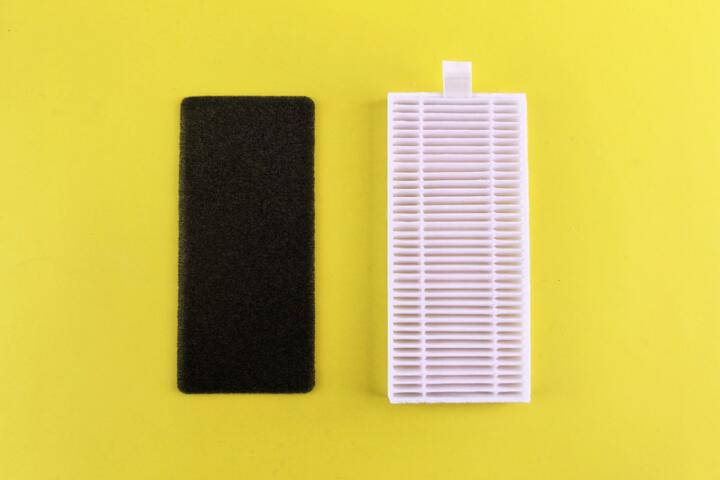
Air Purification Tech
Indoor air quality has become a critical health metric for modern households and offices. Portable air purifiers rely on distinct scientific mechanisms to capture or destroy airborne contaminants. The two most prominent premium technologies in this space are High-Efficiency Particulate Air (HEPA) and Photoelectrochemical Oxidation (PECO).
While mechanical filtration has been the industry standard for decades, molecular destruction tech offers an alternative approach. Understanding how these systems interact with microscopic pollutants is essential for target selection. According to the EPA, indoor air can be two to five times more polluted than outdoor air, making selection accuracy vital.
The choice between these two systems dictates not only initial filtration efficacy but also long-term maintenance overhead, energy consumption, and noise profiles. This comparison looks past marketing terminology to evaluate the true physical performance of each technology type.
The Particle Dilemma
Most consumers misunderstand how air purifiers handle different types of indoor pollution. A common pitfall is assuming that a single filter element can universally eliminate both solid particulates and gaseous chemical compounds. This misconception leads to poor purchasing decisions and inadequate air remediation.
Mechanical filters merely store pollutants over time, creating a secondary risk of bio-nesting if filters are not changed on strict schedules. Gaseous toxins, such as volatile organic compounds (VOCs) like formaldehyde, easily pass through standard particulate filters because their molecular sizes are orders of magnitude smaller than dust.
Conversely, relying solely on destructive technologies that lack sufficient airflow can leave heavy particulate loads, like pet dander and pollen, suspended in the breathing zone. This mismatch between technology and pollutant profile compromises respiratory health environments.
Filtration Mechanisms
HEPA Mechanical Trap
True HEPA filters operate on a mechanical principle using a dense mat of randomly arranged fiberglass fibers. These fibers capture particles through three primary methods: interception, impaction, and diffusion. This traditional approach has been tested and verified across clinical and industrial settings for over 70 years.
In practice, a certified HEPA filter captures at least 99.97% of particles that are 0.3 micrometers in diameter. This specific size is known as the Most Penetrating Particle Size (MPPS). Particles larger or smaller than this threshold are actually caught with even higher efficiency due to predictable physical laws.
PECO Molecule Break
PECO technology, popularized by brands like Molekule, works by initiating a catalytic reaction at the molecular level. When ultraviolet light illuminates a specially coated filter substrate, it generates free radicals on the surface. These highly reactive species attack organic molecules passing through the chamber.
Instead of trapping the pollutant, PECO aims to break the chemical bonds of organic matter, converting viruses, bacteria, mold spores, and VOCs into harmless trace elements like water vapor and carbon dioxide. This chemical destruction process targets contaminants down to 0.1 nanometers.
VOC Gas Remediation
VOCs present a unique challenge because they exist in a gaseous phase. Standalone HEPA filters cannot stop them. To compensate, premium HEPA purifiers incorporate a secondary stage filled with granular activated carbon, which adsorbs the gases onto a vast internal surface area.
PECO handles VOCs directly through its oxidative process, bypassing the need for heavy carbon beds. However, the efficacy of this process depends heavily on the dwell time—the amount of time the polluted air remains inside the reaction chamber under the UV light source.
Microbial Management
When a HEPA filter captures a live virus or bacteria cell, that organism remains trapped on the filter media. In humid environments, this can potentially lead to bacterial colonization or mold growth on the filter surface itself, though modern antimicrobial coatings mitigate this risk.
PECO addresses this by destroying the cellular structure of the microbe. By oxidizing the outer membrane of a bacteria cell or the protein coat of a virus, it renders the pathogen permanently inert, eliminating the possibility of live bio-matter accumulating inside the purifier chassis.
Airflow and Cadence
The thickness of a True HEPA filter creates significant static pressure resistance. To move air through this dense barrier, purifiers require powerful fans. This relationship is quantified by the Clean Air Delivery Rate (CADR), which measures the volume of clean air delivered per minute.
PECO filters are typically less physically dense, which lowers resistance. However, because the catalytic reaction requires sufficient exposure time to destroy molecules, PECO devices often operate at lower airflow velocities, resulting in lower CADR ratings for large particulate loads compared to equal-sized HEPA units.
Performance Profiles
Independent laboratory testing has provided deep insights into how these technologies perform under controlled strain. In tests evaluating the removal of fine dust and smoke particles, high-grade HEPA systems consistently achieve rapid clearance times, dropping ambient PM2.5 levels by 90% within 15 minutes.
Testing on PECO technology shows a different operational arc. While it lags behind in rapid particulate clearance, it demonstrates a steady reduction in airborne chemical concentrations over extended runs. For instance, in sealed chamber tests with gaseous formaldehyde, PECO systems gradually lower parts-per-million metrics over several hours.
Interpreting these results depends on your environment. A home dealing with heavy wildfire smoke or construction dust requires the rapid, high-volume turnover provided by mechanical filtration. A laboratory or specialized clinic managing chemical off-gassing may favor the molecular destruction capabilities of oxidation.
Technology Breakdown
| Metric | True HEPA | PECO Tech | Priority |
|---|---|---|---|
| Action | Mechanical Trap | Photo Oxidation | High |
| PM2.5 | 99.97% Rate | Lower Speed | High |
| Gases | Needs Carbon | Destroys Gas | Medium |
| Byproduct | None | Trace CO2 | Low |
Avoid System Errors
The most severe error when using HEPA systems is buying "HEPA-type" or "HEPA-like" filters. These are marketing terms for filters that do not meet the strict ASME or EN 1822 standards. They often capture only 80% to 90% of particles, letting the most damaging sub-micron pollutants pass back into the room.
For PECO systems, the primary pitfall is ignoring the pre-filter component. Because PECO relies on light reaching a catalyst coating, heavy dust accumulation on the surface will block the UV rays and halt the chemical reaction entirely. Pre-filters must be cleaned or replaced regularly to maintain oxidation rates.
Lastly, operating either system in an oversized room destroys efficiency. Air purifiers are rated by square footage based on achieving 4 to 5 Air Changes per Hour (ACH). Running a compact purifier in a large open-concept living space results in inadequate pollutant clearance regardless of the technology inside.
FAQ
Is HEPA better for allergies?
Yes, for immediate relief from physical allergens like pollen, dust mite debris, and pet dander, True HEPA is superior. Its high CADR ensures that these large, heavy particles are rapidly scrubbed from the air before they can settle on surfaces or be inhaled.
Does PECO produce ozone?
No, certified PECO devices use specific UV wavelengths that do not generate ozone. Unlike older ionizers or generic electrostatic precipitators, PECO is designed to break down molecules safely without adding harmful respiratory irritants back into the indoor environment.
How often do filters change?
HEPA filters typically last between 6 to 12 months, depending on air quality and usage hours. PECO catalytic filters usually require replacement every 6 months to maintain peak chemical reactivity, as the active coating gradually degrades over time under continuous light exposure.
Can HEPA catch viruses?
Yes, while individual viruses can be smaller than 0.3 microns, they rarely travel alone. They are typically expelled within larger respiratory droplets that are easily captured by a True HEPA filter matrix, making them highly effective at reducing viral loads.
Which uses more electricity?
HEPA purifiers require more power to run their heavy-duty fan motors against filter resistance, especially on high settings. PECO units use less fan power but draw a constant electrical load to run the internal UV light array, making their energy profiles relatively comparable.
Author's Insight
Having tested dozens of air purification units in residential and commercial spaces, I always look at the specific environmental goals of the space. I have found that for 90% of consumers, a high-quality True HEPA filter paired with a substantial activated carbon bed provides the most reliable and cost-effective defense against dust and seasonal allergies. PECO is a fascinating technology, but it should be viewed as a specialized tool for targeting volatile organic compounds and gaseous chemical sensitivities rather than a fast-acting dust collector.
Summary
Choosing between HEPA and PECO requires aligning the technology with your primary indoor air threats. True HEPA remains the gold standard for rapid particulate, allergen, and smoke capture due to its high airflow design and proven mechanical consistency. PECO offers a specialized, destructive approach tailored for organic molecules, bacteria, and chemical VOCs. For optimal indoor air remediation, select a certified True HEPA system for dust and allergy management, or look for hybrid configurations that combine both mechanical and oxidative strengths.