Beyond the Wallet: Master the Art of Financial Redundancy
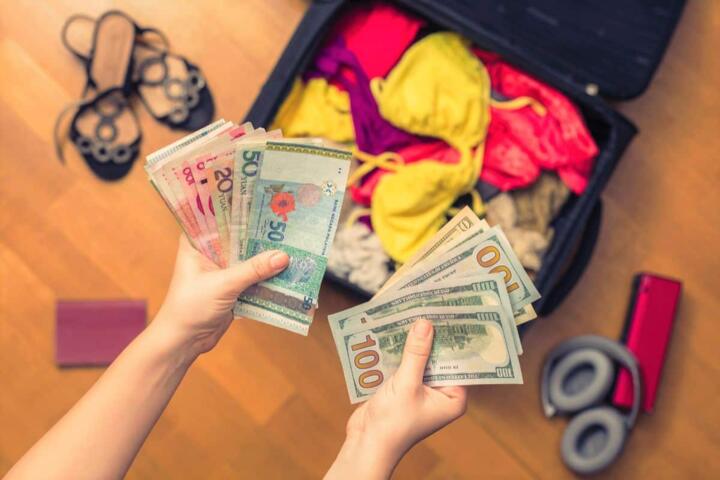
Relying solely on a leather wallet or a smartphone for payments is a single point of failure that seasoned travelers cannot afford. In regions with high rates of petty crime, such as parts of Southeast Asia or South America, "diversification" isn't just an investment strategy—it is a survival tactic. The goal is to separate your primary spending money from your "life-flight" cash, ensuring that if one is compromised, the other remains untouched.
Statistically, the FBI and international insurance entities like World Nomads note that most street robberies are "blitz" events lasting less than 60 seconds. In these high-pressure windows, a thief wants the obvious haul: your pocketed wallet or your phone. They rarely have the time or the inclination to perform a tactile search of your clothing or specialized equipment. This psychological edge allows you to hide $200 to $500 in high-value denominations ($50 or $100 bills) in plain sight.
The Fatal Flaws of Conventional Travel Security
The most common mistake travelers make is using "security" products that look exactly like security products. A bulky, khaki-colored money belt worn over a t-shirt is a beacon to professional pickpockets in Rome or Barcelona. It identifies you as a high-value target who is carrying something worth protecting. Furthermore, storing all backup cash in a single "hidden" location—like the hotel safe—is a gamble, as safe-cracking or "master code" exploits are common in mid-range accommodations.
Consider the "decoy" strategy. Many travelers fail because they fight to keep their wallet during a confrontation. The lack of a sacrificial asset often leads to physical escalation. Without a tiered system of cash distribution, a single loss becomes a trip-ending catastrophe. Real-world data suggests that travelers who lose 100% of their liquid assets are 80% more likely to require emergency repatriation via their embassy, a process that is both grueling and expensive.
Strategic Gear for Invisible Cash Management
To effectively hide backup currency, you must utilize items that serve a dual purpose and possess a low "tactical" profile.
The Hidden-Chamber Leather Belt
Unlike nylon money belts with visible zippers, high-end leather options like those from Rossi or Galco feature an internal zipper on the underside of the strap. These are indistinguishable from standard dress belts. By folding bills into narrow strips, you can store up to ten $100 bills. This works because the belt remains on your person even if you are forced to hand over your bag or wallet.
Tactical Footwear Modifications
Shoes are rarely stolen in urban muggings. High-quality travel boots, such as those from Danner or Lowa, often have removable insoles. Placing a vacuum-sealed $100 bill beneath the arch of the insole provides a last-resort fund. For those in warmer climates, specialized "stash" flip-flops by Reef feature a slide-out drawer in the heel, though these are better for beach days than long-distance trekking.
Modified Toiletry Containers
Criminals rarely look for value in hygiene products. Brands like Barbasol or standard soda manufacturers offer "diversion safes"—hollowed-out cans that feel weighted to mimic the original product. For a more portable version, an empty lip balm tube (like Burt’s Bees) can hold a tightly rolled $50 bill. This is an ideal "micro-stash" for taxi fare if your primary bag is snatched.
Conductive Shielding and RFID Blocking
While physical theft is the primary concern, digital skimming of "tap" cards is a rising threat in transit hubs. Using a slim, metallic cardholder like an Ekster or Ridge wallet allows you to keep a single backup credit card and one large bill hidden between your phone and its case. The RFID-blocking properties prevent unauthorized scans while the slim profile avoids "pocket bulge" that attracts pickpockets.
Apparel with Integrated Secret Pockets
Clothing manufacturers like SCOTTeVEST and Clothing Arts design "Pickpocket Proof" pants and jackets. These garments feature dual-layered pockets where a visible zipper leads to a decoy area, while a hidden, deeper compartment holds the actual valuables. In a "search" scenario, a thief feels the first layer and assumes it is empty.
Field Case Studies in Financial Resilience
Case 1: The Bogota Transit Incident
A freelance journalist traveling through Colombia utilized a tiered cash system. They carried a "decoy" wallet with $20 in local currency and expired credit cards. Their primary cash ($300) was stored in a Clothing Arts hidden pocket, and an emergency $100 was tucked into a Rossi money belt. When approached by two individuals, the journalist surrendered the decoy wallet immediately. The interaction ended in seconds. The journalist lost $20 but maintained 95% of their total funds and all functional identity documents.
Case 2: The Lost Luggage Crisis in Bangkok
A traveler’s backpack, containing their primary wallet and all electronics, was stolen from a bus depot. However, the traveler had adhered to the "shoe-stash" rule, keeping a $100 bill under the insole of their Salomon hiking shoes. This emergency fund allowed them to take a secure taxi to their embassy, pay for a temporary passport photo, and secure a night in a reputable hotel while waiting for a wire transfer. Total recovery time was reduced from days to hours.
Comparison of Discreet Storage Methods
| Method | Capacity | Accessibility | Risk Level | Best For |
|---|---|---|---|---|
| Money Belt (Underwear) | High ($1000+) | Low (Requires privacy) | Very Low | Transit days/Border crossings |
| Hidden Belt Zipper | Medium ($500) | Moderate | Low | Daily wear in cities |
| Diversion Toiletry Can | Medium ($300) | Moderate | Low | Leaving in hotel room |
| Shoe Insole | Low ($100) | Very Low | Minimal | Emergency "Get Home" fund |
| Secret Apparel Pockets | High ($500+) | High | Moderate | High-density tourist areas |
Common Pitfalls to Avoid
- The Over-Stuffed Look: If your "hidden" belt creates a visible bulge around your waist, it isn't hidden. Use high-denomination bills to keep the profile flat.
- Forgetting the Stash: Many travelers leave backup cash in a coat or shoe and then send that item to be cleaned or leave it behind in a hotel. Always perform a "gear sweep" before checking out.
- Poor Denomination Choice: Hiding small bills (like $1s or $5s) is a waste of space. Emergency stashes should always consist of the highest possible denomination of a stable currency (USD, EUR, or GBP).
- Moisture Damage: Cash hidden against the body can become soaked with sweat, potentially ruining the paper or making it suspicious to vendors. Always wrap backup cash in a small plastic shim or use a specialized waterproof sleeve.
FAQ
Where is the safest place on my body to hide cash?
The most secure area is generally the "waistline" or below. Pickpockets are experts at chest and pants pockets. A hidden zipper inside a leather belt or a small pouch clipped to the interior of your waistband (near the small of your back) is difficult to detect even during physical contact.
Should I use local currency or USD for my backup stash?
In almost every country, the US Dollar remains the "gold standard" for emergencies. While you should have local currency for daily spending, your hidden backup should be in crisp, newer-issue $50 or $100 USD bills, as these are easily exchanged even in remote areas.
Is it better to hide cash in my hotel room or on my person?
On your person is generally safer, provided you aren't using an obvious "tourist" pouch. Hotel safes are frequently compromised by staff using override codes. If you must leave cash in the room, use a diversion safe (like a hollowed-out hairspray bottle) rather than the electronic safe.
How do I access my hidden cash without being seen?
Never "dig" for your backup cash in public. If you need to access it, find a private bathroom stall or return to your hotel room. If you are forced to access it in an emergency, do so inside a bag or under a jacket to shield the movement.
How much emergency cash is enough?
A standard recommendation is $200 to $500. This is typically enough to cover a night in a high-end hotel, a domestic flight, or a long-distance private taxi to an embassy or major airport.
Author’s Insight
In my fifteen years of navigating high-risk zones, from the borders of Eastern Europe to the markets of North Africa, I’ve learned that the best hiding spot is the one that feels most natural. I once spent three days in a region where my bank cards were blocked due to a regional glitch. My "shoe cash"—a single, sweaty $100 bill—saved me from a very uncomfortable situation. My advice? Don't just hide the money; forget it’s there. If you don't remember you're carrying it, you won't subconsciously "check" it with your hand, a "tell" that every professional thief is looking for.
Conclusion
Securing backup funds is an exercise in layering and psychological warfare. By moving away from obvious "traveler" gear and adopting a system of high-quality, discreet accessories—such as internal-zipper belts, modified footwear, and diversion containers—you create a safety net that survives even the most determined theft. The key is to distribute your wealth: a sacrificial decoy for the street, a primary stash for the day, and an invisible reserve for the unthinkable. Implement these tactics before your next departure to ensure that a single bad encounter doesn't dictate the end of your journey.