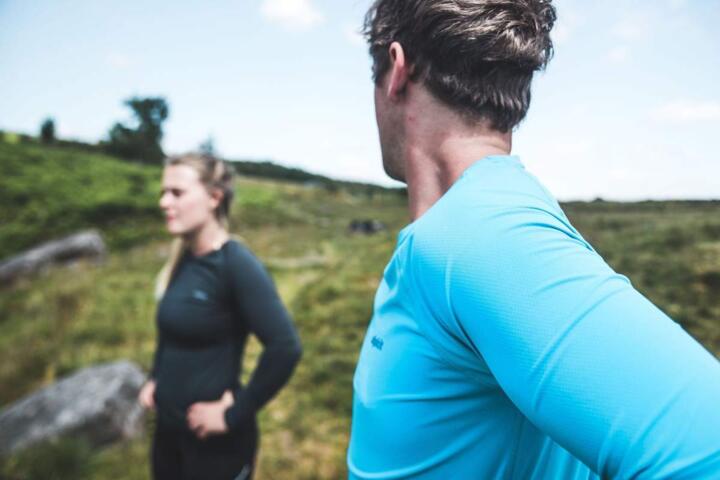
Personal Microclimates
A technical base layer is not merely a shirt; it is a mechanical interface between your skin and the environment. Its primary function is "wicking"—the capillary action that moves liquid sweat away from the dermis to the outer surface of the fabric where it can evaporate. Without this process, moisture remains trapped against the skin, leading to conductive heat loss that is up to 25 times faster than in dry conditions.
In professional mountaineering and endurance sports, we categorize performance based on the fiber’s hydrophobicity. Synthetic fibers, typically polyester or nylon, are hydrophobic, meaning they repel water and dry almost instantly. Merino wool, conversely, is hygroscopic; it can absorb up to 35% of its own weight in moisture within its core while the surface remains dry to the touch. This fundamental biological difference dictates whether you should reach for a specialized synthetic knit for a 10k trail run or a premium wool weave for a week-long backcountry expedition.
The Physics of Fiber Surface Area
Standard cotton fibers are heavy and absorbent, holding onto water like a sponge. Technical fibers use "denier" variations and shaped filaments (like the cruciform shape found in many high-end polyesters) to increase surface area. Greater surface area means faster evaporation. In a lab setting, a high-quality synthetic base layer can dry 40% faster than a lightweight wool equivalent, which is a critical metric for stop-and-go activities in sub-zero temperatures.
Bio-Regulation and Heat of Sorption
One of the most fascinating aspects of natural fibers is the "heat of sorption." When wool absorbs moisture, a chemical reaction occurs that actually releases a small amount of heat. This prevents the "flash chill" often experienced when you stop moving after a heavy climb. Data from textile research indicates that this subtle thermal buffer provides a more stable heart rate during rest intervals compared to thinner, non-insulated synthetics.
Critical Strategy Errors
The most frequent mistake I see in the field is the "Cotton Trap." Even today, nearly 20% of novice hikers start their journey wearing cotton blends, which leads to "wet-out." Once cotton is wet, it loses 90% of its insulating properties. In high-altitude environments like the Swiss Alps or the Cascades, this isn't just uncomfortable; it’s a precursor to stage-one hypothermia.
Another major pain point is the "Weight-to-Warmth" miscalculation. Many users assume a thicker layer is always better. However, if a base layer is too thick for the activity level, it causes excessive sweating that overwhelms the fabric's wicking capacity. This leads to a saturated layer that fails to move moisture to the mid-layer, effectively drowning the user in their own perspiration.
Failure to account for "Permanent Odor Retention" in synthetics is a logistical nightmare for multi-day trips. Traditional polyester fibers provide an ideal breeding ground for Staphylococcus and Micrococcus bacteria. Without specific antimicrobial treatments, a synthetic shirt can become socially unbearable within 24 hours, whereas a natural fiber garment can often be worn for 5 to 7 days straight without significant odor buildup.
Perfect Layering Solutions
To maximize performance, you must match the fiber type to the metabolic output of your specific activity.
Identifying High-Output Synthetic Applications
For activities where heart rates exceed 150 BPM for extended periods—such as Nordic skiing, trail running, or competitive cycling—synthetics are the gold standard. Look for "mechanical stretch" rather than high Lycra content, as Lycra/Spandex holds onto more moisture than pure polyester.
- The Method: Choose a "zoned" construction where thinner mesh panels are placed under the arms and down the spine.
- The Result: A 15% improvement in thermal venting and a dry-time of under 20 minutes after total saturation.
Optimizing Natural Fibers for Multi-Day Endurance
For trekking, alpine climbing, or hunting, where you may not change clothes for days, 100% Merino wool or high-merino blends (85% wool, 15% nylon) are superior. The nylon core provides the durability that pure wool lacks, preventing the common "pin-hole" degradation seen in 100% wool garments.
- The Method: Select a mid-weight 200g/m² (grams per square meter) fabric for three-season use.
- The Result: Superior temperature regulation in a range from -5°C to +20°C.
Hybrid Fabric Integration
The industry is shifting toward "bi-component" knits. Brands like Polartec have mastered the Power Wool technology, which places wool against the skin for comfort and odor resistance, and a synthetic exterior for rapid moisture dispersal. This offers a "best of both worlds" scenario for high-alpine guides who face unpredictable weather shifts.
Precision Fit and Skin Contact
A base layer only works if it is in direct contact with the skin. Any "dead air" space between the body and the fabric allows moisture to turn into vapor before it can be wicked away, causing it to condense back into liquid on the skin.
- The Method: Ensure a "Next-to-Skin" (NTS) fit. It should be snug but not restrictive.
- The Result: 100% efficiency in capillary action, reducing the risk of chafing and maximizing thermal retention.
Understanding Micron Ratings for Comfort
The "itch" associated with wool is a factor of fiber diameter, measured in microns. Traditional wool is >30 microns. Technical Merino used by premium brands is typically 17.5 to 18.5 microns.
- The Fact: Human skin usually detects "itch" at 25 microns. By using 18-micron fibers, high-end base layers feel as soft as silk, making them viable for those with sensitive skin.
Performance Field Reports
Case Study: The High-Altitude Expedition
A team of four climbers attempted a winter ascent in the White Mountains, NH. Two members wore 100% synthetic layers, while the other two wore 200gsm Merino wool.
- The Problem: Ambient temperature was -15°C with high wind chill. The synthetic-clad climbers experienced severe "flash-chill" during belay sessions because their sweat evaporated too aggressively, stripping body heat.
- The Intervention: On day two, the synthetic group added a wind-blocking vest, but remained damp. The wool-clad climbers reported consistent warmth despite dampness from the approach.
- The Result: The wool users consumed an estimated 10% fewer calories to maintain core temp, as measured by heart rate variability (HRV) and perceived exertion scales.
Case Study: Ultra-Trail Logistics
A solo runner participated in a 100-mile desert race with temperatures fluctuating from 30°C during the day to 5°C at night.
- The Problem: Carrying multiple changes of clothes was weight-prohibitive.
- The Intervention: The runner utilized a lightweight (120gsm) synthetic layer with Polygiene (silver salt) odor control.
- The Result: The layer dried in under 10 minutes at every aid station. The silver ion treatment prevented bacterial growth, allowing the runner to use a single shirt for 24 hours without skin irritation or overwhelming odor.
Technical Matrix
| Feature | Synthetic (Polyester/Nylon) | Merino Wool (Natural Fiber) |
|---|---|---|
| Moisture Management | Excellent (Hydrophobic/Fastest Dry) | Good (Hygroscopic/High Absorption) |
| Durability | High (Resists abrasion and pilling) | Moderate (Requires careful washing) |
| Odor Resistance | Low (Requires chemical treatments) | Inherently High (Antibacterial) |
| Thermal Regulation | Good when active; poor when wet | Excellent (Insulates even when damp) |
| Skin Comfort | Soft, but can feel "plastic-like" | Extremely soft (if <19 micron) |
| Best Use Case | High intensity, short duration | Low-Medium intensity, multi-day |
| Maintenance | Machine wash/dry (standard) | Delicate wash/Air dry preferred |
Mistakes and Recovery
Over-Washing Technical Fabrics
Using standard laundry detergents on Merino or high-end synthetics ruins the performance. Standard soaps contain "brighteners" and enzymes that can strip the natural lanolin from wool or clog the pores of synthetic fibers.
- The Fix: Use a technical wash like Nikwax BaseWash for synthetics or Grangers Merino Wash. These maintain the wicking surface and restore the fabric's integrity.
Neglecting the "Sun Factor"
Many people forget that a base layer is often their only layer during a summer climb. Synthetics usually offer a higher UPF (Ultraviolet Protection Factor) naturally, whereas light-colored wool might only provide a UPF of 15-20.
- The Fix: Check the UPF rating on the garment. Brands like Outdoor Research and Patagonia specifically engineer their summer base layers to provide UPF 50+ protection.
Using Fabric Softeners
This is the "death blow" for technical apparel. Fabric softeners coat fibers in a waxy film to make them feel soft. This film is hydrophobic in the wrong way—it blocks the fabric's ability to move moisture, effectively turning a $100 technical shirt into a plastic bag.
- The Fix: If you’ve accidentally used softener, wash the garment twice with a dedicated "stripping" agent or a cup of white vinegar to dissolve the wax buildup.
FAQ
Which is better for extreme cold?
Merino wool is generally superior for extreme cold due to its ability to trap air within its crimped fibers and its thermal stability when you stop moving. However, a synthetic layer is better if you are doing extremely high-output work like speed-climbing where you will be sweating profusely.
Does Merino wool shrink?
Modern "Superwash" Merino is treated to be machine washable, but high heat in a dryer will still cause fiber contraction. Always air dry wool to maintain the original fit and length.
Is synthetic clothing bad for the environment?
Traditional polyesters shed microplastics. If sustainability is a priority, look for recycled polyester (like Unifi's REPREVE) or stick to Merino wool, which is biodegradable and renewable.
Why do some synthetics smell worse than others?
Cheaper polyesters have jagged fiber structures that trap bacteria. Premium synthetics use silver-ion tech or smoother filament shapes to minimize the surface area available for bacteria to latch onto.
Can I mix a wool base with a synthetic mid-layer?
Yes, this is actually a highly effective "hybrid" strategy. The wool regulates the skin temperature, while a synthetic mid-layer (like a fleece) pulls the moisture out of the wool and pushes it toward the outer shell.
Author’s Insight
In my fifteen years of testing gear in the backcountry, I have moved away from the "all or nothing" approach. I’ve found that the most effective system for most people is a "Synthetic-Wool Blend" (roughly 50/50). This specific ratio provides the durability and lightning-fast dry times of polyester while retaining the cozy, anti-stink properties of Merino. If you are starting out, don't buy the cheapest option at a big-box store; invest in one high-quality piece from a reputable manufacturer like Smartwool, Icebreaker, or Arc'teryx. A single $90 base layer that actually works is worth more than five $20 shirts that leave you shivering at the summit.
Summary
Choosing the right technical base layer requires an honest assessment of your activity level and the environment. Synthetics remain the undisputed champion for high-octane, sweat-heavy pursuits where drying speed is the primary safety metric. Merino wool dominates for those seeking comfort, natural odor regulation, and reliable warmth across multiple days. For the best results, avoid the common pitfalls of using fabric softeners and wearing cotton, and prioritize a "next-to-skin" fit to ensure your layering system functions as a cohesive unit. Focus on the micron count for comfort and the GSM weight for thermal needs, and you will ensure your focus remains on the landscape rather than your body temperature.