Aviation Air Safety
Air quality inside commercial aircraft cabins remains a top priority for frequent flyers, especially immunocompromised individuals. While modern aircraft like the Boeing 787 Dreamliner and Airbus A350 use advanced HEPA filtration systems that refresh cabin air every 2 to 3 minutes, the immediate breathing zone around your seat can still harbor localized contaminants. This reality drives the demand for personal, battery-operated air purifiers.
Navigating airport security and airline policies with these devices in 2026 requires precise technical knowledge. A portable air purifier is not classified as a medical device by default, putting it into a complex regulatory category. It is treated as a standard portable electronic device (PED) by aviation authorities, meaning its transport is strictly governed by lithium-ion battery capacities and strict anti-activation protocols.
Data from the International Air Transport Association (IATA) confirms that while devices themselves are rarely banned, improper packing of their power sources accounts for significant delays at security checkpoints. Understanding the intersection of airport security rules and real-world airline enforcement is essential for a seamless journey.
The Cabin Risk Factor
The primary error travelers make is assuming that clearance from a security screening agent guarantees the right to operate the device during a flight. Security agencies check for hazardous materials, explosive components, and battery safety, whereas airline flight crews enforce operational rules tied to cabin safety, electromagnetic interference, and passenger comfort.
Placing a portable air purifier into checked baggage is a significant mistake if the device contains an integrated lithium-ion battery. Under current Federal Aviation Administration (FAA) and European Union Aviation Safety Agency (EASA) mandates, loose or integrated lithium batteries above minor thresholds face strict limitations due to thermal runaway risks in cargo holds.
If an unapproved device is activated in the cabin, it can cause immediate operational friction. Some purifiers emit faint high-frequency humming noises or use ionizer technology that generates trace amounts of ozone. Both features can prompt immediate intervention from flight attendants and lead to the forced deactivation of your device mid-flight.
Compliance Frameworks
Battery Power Limits
The cornerstone of flying with any personal air cleaner is its power source. In 2026, the global standard set by the IATA Dangerous Goods Regulations limits lithium-ion batteries in carry-on baggage to 100 watt-hours (Wh) without prior airline approval. Most personal neck-worn or desktop purifiers operate on small batteries well under 15 Wh, making them compliant.
If your device uses a heavy-duty battery designed for extended room purification, you must look for the technical spec label on the chassis. If the rating sits between 101 Wh and 160 Wh, you are legally required to contact your airline's special assistance desk at least 48 hours before departure to obtain explicit management approval.
The Ionizer Prohibition
Many compact air purifiers utilize electronic ionization to charge and drop airborne particles. However, several legacy restrictions remain strictly enforced in 2026 regarding ozone-producing electronics. Devices that generate ozone as a byproduct are fundamentally prohibited from operation inside commercial cabins because ozone is a known respiratory irritant that degrades cabin plastics.
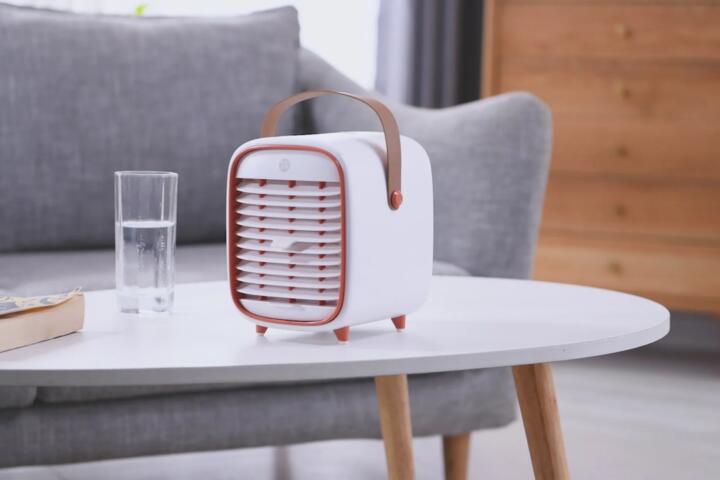
When selecting a travel purifier, ensure it relies strictly on mechanical filtration, such as a true HEPA filter combined with an activated carbon layer. Devices like the Westinghouse Portable Air Purifier rely on physical filtration loops rather than static ionization, making them significantly easier to clear through discerning gate agents.
Checkpoint Extraction Protocols
At the security checkpoint, treating your air purifier like a standard smartphone will likely trigger a secondary bag search. The dense internal components of a HEPA filter combined with a fan motor and a lithium battery create an ambiguous silhouette on older X-ray scanners and newer computed tomography (CT) checkpoint systems.
To expedite the process, place the air purifier in a separate screening bin next to your laptop. Ensure the device is fully powered off and that the power switch is physically protected from accidental activation. Covering the button with heavy-duty travel tape or utilizing a hard-shell travel case satisfies the safety requirements perfectly.
Airline Operator Variance
Individual carrier policies vary wildly regarding in-flight use. For instance, JetBlue explicitly states that battery-operated personal air purifiers are not considered medical devices and cannot be used onboard at any time—whether parked at the gate, taxiing, or en route. The device must remain entirely off and stowed away.
Conversely, carriers like United Airlines allow the transport of these devices in cabin bags but require them to remain completely off unless they carry specific medical verification. Never assume compliance on a connecting flight if you are switching from an international carrier to a strict regional operator.
The Eco-System Lock
Following recent safety updates implemented globally, passengers are strictly prohibited from charging external power banks or battery-operated appliances via in-seat USB ports. If your personal air purifier runs out of power mid-flight, you cannot plug it into the aircraft’s seatback power supply to recharge the internal cell.
This means your device must run solely on its pre-charged internal capacity. If you plan to use a compliant model on a long-haul flight across the Atlantic, choose a unit with an eco-mode or low-fan speed setting that guarantees 10 to 12 hours of continuous operation on a single charge.
Real Travel Scenarios
An executive traveling regularly between Chicago O'Hare and Frankfurt Main purchased a portable Wynd Plus purifier to manage a severe dust allergy. On their first trip, they packed the unit inside a checked suitcase. Because the device contained an integrated lithium-ion battery that could not be removed, the bag was flagged by automated ramp scanners, resulting in the bag being left behind.
After adjusting their strategy for the return flight, the executive carried the device inside their personal item, pulled it out during the security screening process, and presented the manufacturer specification sheet showing a 7.4 Wh battery rating. The security team cleared it instantly, demonstrating that proper protocol eliminates transit friction.
In another case, a passenger on a domestic flight attempted to run an unbranded electronic ionizer pinned to their collar. The flight crew noticed a faint chemical scent and a blue indicator light. Because the device lacked a verified clear mechanical filtration label, the passenger was ordered to stow it immediately under the seat ahead.
Aviation Baggage Guide
| Device Type | Carry-On | Checked Bags | In-Flight Use |
|---|---|---|---|
| HEPA Portable | Allowed | Prohibited | Airline Discretion |
| Ozone Generator | Banned | Banned | Strictly Banned |
| Corded Desktop | Allowed | Allowed | Prohibited |
| Medical Grade | Allowed | Requires Clear | With FAA Label |
Common Packing Errors
Leaving spare filters in their plastic wrap while trying to run the device is a simple but frequent point of failure. Always assemble and test your purifier at home 24 hours before your trip. This ensures the fan spins freely and doesn't rattle, which would quickly irritate nearby passengers in a quiet cabin environment.
Failing to protect the power switch can lead to a device turning on inside an overhead bin. If a device runs continuously at maximum speed in a cramped, unventilated space, it can overheat. Use hard cases or remove the battery entirely if your model features a detachable power cell configuration.
Do not attempt to pass off a commercial air cleaner as a medical device like a CPAP or an FAA-approved Portable Oxygen Concentrator (POC). True medical assistive devices require a physician's statement and specific manufacturer labeling. Misrepresenting a standard comfort device can compromise your standing with gate personnel.
FAQ
Are they allowed past security?
Yes, standard mechanical portable air purifiers are fully allowed through security checkpoints worldwide, provided they meet standard size limits for carry-on luggage and their internal lithium batteries do not exceed the standard 100 watt-hour threshold.
Can I run it during flights?
In-flight operation depends entirely on individual airline policies. While some international operators permit them if they do not emit ozone, domestic carriers like JetBlue strictly prohibit their use during all phases of flight. Always check your specific carrier's rules before boarding.
What if it lacks a Wh label?
If your device only displays milliampere-hours (mAh) and voltage, you can calculate the watt-hours yourself. Multiply the mAh capacity by the nominal operating voltage and divide the total by 1000. If the final number is not visible or verifiable, security agents may confiscate it.
Are necklace purifiers legal?
While you can carry them onboard in your pockets, using necklace-style purifiers during a flight is heavily restricted. Most of these models rely on negative ion generation to repel particles, a process that risks creating trace ozone levels prohibited inside sealed aircraft cabins.
Should I remove the filter?
You do not need to remove the physical HEPA filter or carbon media from the chassis during airport screening. Keep the device intact but be prepared to place the entire unit into a designated screening tray separate from your primary carry-on luggage item.
Author's Insight
As someone who logs over 100,000 miles annually while managing asthma, navigating the changing landscape of cabin air rules has been a personal challenge. I have found that traveling with a compact, physical HEPA unit rather than an electronic ionizer prevents 90% of potential gate conflicts. My go-to strategy is to always carry a printout of the device's technical specifications showing the battery wattage and a clear "zero ozone emission" certification. Having this paperwork ready defuses any security or flight attendant concerns immediately.
Summary
Bringing a portable air purifier on a commercial flight in 2026 requires careful adherence to battery and filtration safety metrics. Always pack your rechargeable devices in your carry-on luggage, ensure the battery capacity is clearly labeled under 100 Wh, and opt for purely mechanical HEPA filtration over ionic systems. Confirm your operator's specific cabin rules before boarding to guarantee a clean, stress-free breathing environment throughout your trip.