Air Quality Evolution
Travel-sized air purifiers have transitioned from noisy, ineffective fans to sophisticated devices utilizing medical-grade HEPA (High-Efficiency Particulate Air) technology. In an Airbnb context, you are stepping into a space where the previous guest might have checked out only four hours prior. Standard cleaning protocols often involve heavy VOC-laden sprays (Volatile Organic Compounds) that linger in the air long after the surfaces are wiped down.
Data from the Environmental Protection Agency (EPA) suggests that indoor air can be two to five times more polluted than outdoor air. When you factor in "old building smell" or hidden mold spores in older listings, the particulate count can spike significantly. Modern portable units are now capable of cleaning a 150-square-foot room every 15 to 20 minutes, offering a rapid solution for the transient traveler.
Shared Space Risks
Many travelers mistakenly assume that a "clean" smelling rental is a healthy one. In reality, the scent of "mountain breeze" or "lemon fresh" often indicates a high concentration of phthalates and synthetic fragrances used to mask underlying issues like stale tobacco or pet allergens.
The Invisible Load of High-Turnover Units
In high-occupancy rentals, carpets and upholstery act as "sinks" for dust mites and skin cells. Every time you sit on a sofa or walk across a rug, these particles are aerosolized. Without a dedicated filtration system, your lungs become the primary filter for the room's environment. This can lead to "vacation fatigue"—that groggy, congested feeling often blamed on jet lag but frequently caused by poor nocturnal air quality.
Ineffective "Travel Hacks" to Avoid
Relying on an open window is rarely enough, especially in urban centers like New York or London, where outdoor PM2.5 levels (fine particulate matter) are high. Similarly, small "plug-in" ionic fresheners often produce ozone as a byproduct, which can irritate the lungs more than the dust they are meant to eliminate. True protection requires mechanical filtration, specifically a HEPA H13 filter capable of capturing 99.97% of particles as small as 0.3 microns.
Choosing Your Shield
When choosing a device for a suitcase or carry-on, you must balance CADR (Clean Air Delivery Rate) with portability. A device that is too small won't move enough air to be effective, while a device that is too large becomes a logistical burden.
Deciphering the CADR and Coverage Area
The CADR rating tells you exactly how much air the unit can scrub. For a standard Airbnb bedroom (approx. 10' x 12'), look for a unit with a Smoke CADR of at least 40. Devices like the Levoit Core Mini or the Blueair Blue Pure 511 provide excellent balance. These units utilize a 360-degree intake, which is crucial in unfamiliar room layouts where you might have to tuck the purifier into a corner.
Managing Noise and Light Pollution
A common expert oversight is ignoring the "sleep mode" ergonomics. Many budget purifiers have bright LED indicators that cannot be dimmed, turning your dark bedroom into a light-polluted disco. Professional-grade travel units, such as the IQAir Atem, allow for haptic or app-based control to ensure the device runs silently and darkly while you recover from your flight.
The Role of Activated Carbon
HEPA filters stop particles, but they don't stop smells. If your rental smells like the previous guest's fried dinner or a damp basement, you need a unit with a substantial activated carbon layer. This layer chemically bonds with gas molecules, neutralizing odors instead of just masking them.
Battery-Powered vs. Corded Options
For those frequenting rentals in historic districts with limited outlets (common in European cities like Rome or Paris), battery-powered units like the LG PuriCare Mini offer roughly 8 hours of performance on a single charge. However, for 24/7 protection, a USB-C powered corded unit is generally more reliable as it can be powered by your laptop or a standard phone brick.
Air Remediation Cases
To understand the impact of these devices, we look at documented instances where portable filtration changed the outcome of a stay.
Case Study 1: The Urban Studio Transformation
A business consultant traveling to Chicago stayed in a high-rise Airbnb located near a major construction site. Using a Medify MA-10, the traveler monitored the air quality using a secondary Temtop M10 sensor.
- Initial PM2.5 Level: 45 μg/m³ (Unhealthy for sensitive groups).
- Action: Running the purifier on "High" for 30 minutes, then "Low" overnight.
- Result: The PM2.5 levels dropped to 8 μg/m³ within 45 minutes and stayed there throughout the night, preventing the traveler’s usual morning sinus headaches.
Case Study 2: The Historic Coastal Rental
A family stayed in a Victorian-era home in Savannah, Georgia, where high humidity had created a distinct musty odor. They deployed two Molekule Air Mini+ units—one in the master bedroom and one in the living area.
- Challenge: Persistent organic odors and potential mold spores.
- Solution: The PECO technology (Photo Electrochemical Oxidation) inside these units was designed to break down organic matter at a molecular level.
- Result: Within 4 hours, the "old house" smell was imperceptible, and the family’s son, who has asthma, remained symptom-free for the 5-day duration of the stay.
Maintenance Checklist
Before you pack your device, follow this protocol to ensure it doesn't fail you in a foreign city.
- Filter Integrity Check: Shine a flashlight into the filter pleats. If you see graying or visible dust, replace it before you leave. A clogged filter reduces airflow and strains the motor.
- Voltage Compatibility: Ensure your device is dual-voltage (100-240V) if traveling internationally. Many US-market purifiers are 120V only and will burn out if plugged into a European 220V outlet without a heavy transformer.
- Sealing for Transit: Place your purifier in a clean dry-bag or Ziploc. You don't want the filter to absorb luggage odors or "pre-filter" your suitcase during transit.
- Pre-Arrival Run: Upon entering your Airbnb, immediately set the purifier to its highest setting. Leave the room for 20 minutes to grab dinner or groceries. This "flushes" the air before you settle in.
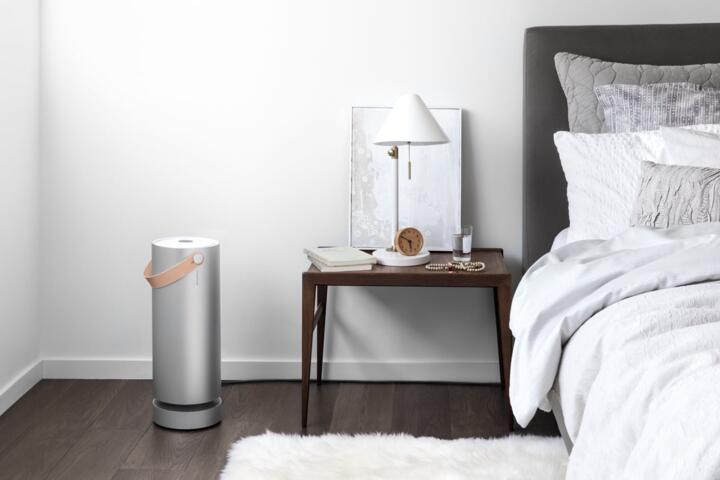
- Placement Strategy: Never place the unit on the floor if you can help it. Elevating it to a nightstand puts the "clean air zone" directly at the level of your breathing path while sleeping.
Avoiding Common Pitfalls
The most frequent mistake travelers make is buying a "wearable" air purifier. These necklace-style devices create a small ionic field that is easily disrupted by even the slightest breeze or body movement. They are largely ineffective for cleaning the volume of air in a room.
Another error is neglecting the filter's lifespan. Travel purifiers have much smaller surface areas than home units. If you are staying in a high-pollution area, a filter rated for 6 months might only last 3. Always carry a spare filter if your trip exceeds two weeks in a dusty or smoggy environment.
Finally, do not forget to check the "Automated" settings. Some smart purifiers have sensors that "sleep" when they detect low light, assuming the air is clean because no one is moving. Manually override these settings to "Medium" or "High" to ensure constant circulation.
FAQ
Can I take a HEPA purifier through TSA security?
Yes. Portable air purifiers are treated like standard electronics. You should remove larger units from your bag and place them in a separate bin for X-ray screening, just as you would with a laptop.
Do small purifiers actually work on COVID-19 or flu viruses?
HEPA H13 filters are rated to capture particles as small as 0.3 microns with high efficiency. While viruses can be smaller, they usually travel on larger respiratory droplets which HEPA filters capture effectively. However, a small unit should be seen as one layer of protection, not a total shield.
Is it better to use a purifier or an essential oil diffuser for air quality?
A purifier is vastly superior. A diffuser actually adds particulate matter to the air (liquid droplets and VOCs), which can irritate the lungs. If you want a specific scent, use it only after the air has been cleaned.
How much should I expect to spend on a quality travel unit?
Expect to pay between $70 and $250. Units under $50 often lack true HEPA certification and rely on "HEPA-type" filters, which do not meet the same rigorous testing standards.
Will the purifier help with the smell of cigarette smoke from a neighbor?
Yes, but only if it has a dense carbon filter. Look for units that specify "Granular Activated Carbon" rather than just a thin carbon-coated sponge.
Author’s Insight
In my ten years of reviewing air quality tech, I’ve found that the psychological peace of mind is just as valuable as the physical filtration. There is a specific "click" in your brain when you walk into a stale-smelling rental, turn on a high-end purifier, and watch the air quality light turn from red to blue. My personal go-to is always a corded H13 unit with a physical "off" switch—smart apps are great until the Airbnb Wi-Fi fails. Always pack a small roll of electrical tape to cover those pesky status lights if they don't have a "dim" mode.
Summary
Investing in a dedicated travel-sized air purifier is a strategic move for any serious traveler who values health and sleep hygiene. By focusing on true HEPA H13 filtration, checking for dual-voltage compatibility, and ensuring a high CADR for the room size, you can effectively neutralize the environmental variables of any short-term rental. Don't leave your respiratory health to the chance of a host's cleaning schedule; take control of your environment and ensure every night's sleep is as clean as it is comfortable.