Blackout Curtains And Light
Blackout curtains aim to block visible light and reduce glare, but “blackout” does not always mean the room becomes fully dark. In practice, light leaks through seams, hems, rod pockets, and gaps along the sides or floor. For sleep and comfort, the difference between “mostly dark” and “dark enough” depends on your room geometry, window type, and how the curtain is hung.
Measuring real room light control helps you predict outcomes before you rely on the curtains at night. A product may claim 100% blackout, yet a small gap near the floor can still brighten the room. If you have ever noticed a hallway glow through a window edge, that effect is measurable.
Light control is usually discussed in two ways: visible light reduction and how much stray light remains after installation. Visible light reduction can be measured with illuminance in lux, while stray light behavior depends on reflectivity of walls and the direction of incoming light. On a bright day, even a small leak can raise the room’s illuminance enough to affect sleep for some people.
Common Measurement Mistakes
People often measure the curtain fabric in isolation, then assume the room will match the label. Fabric performance does not include the real-world installation details that dominate results: overlap width, ceiling height, curtain length, and whether the rod sits inside or outside the window frame.
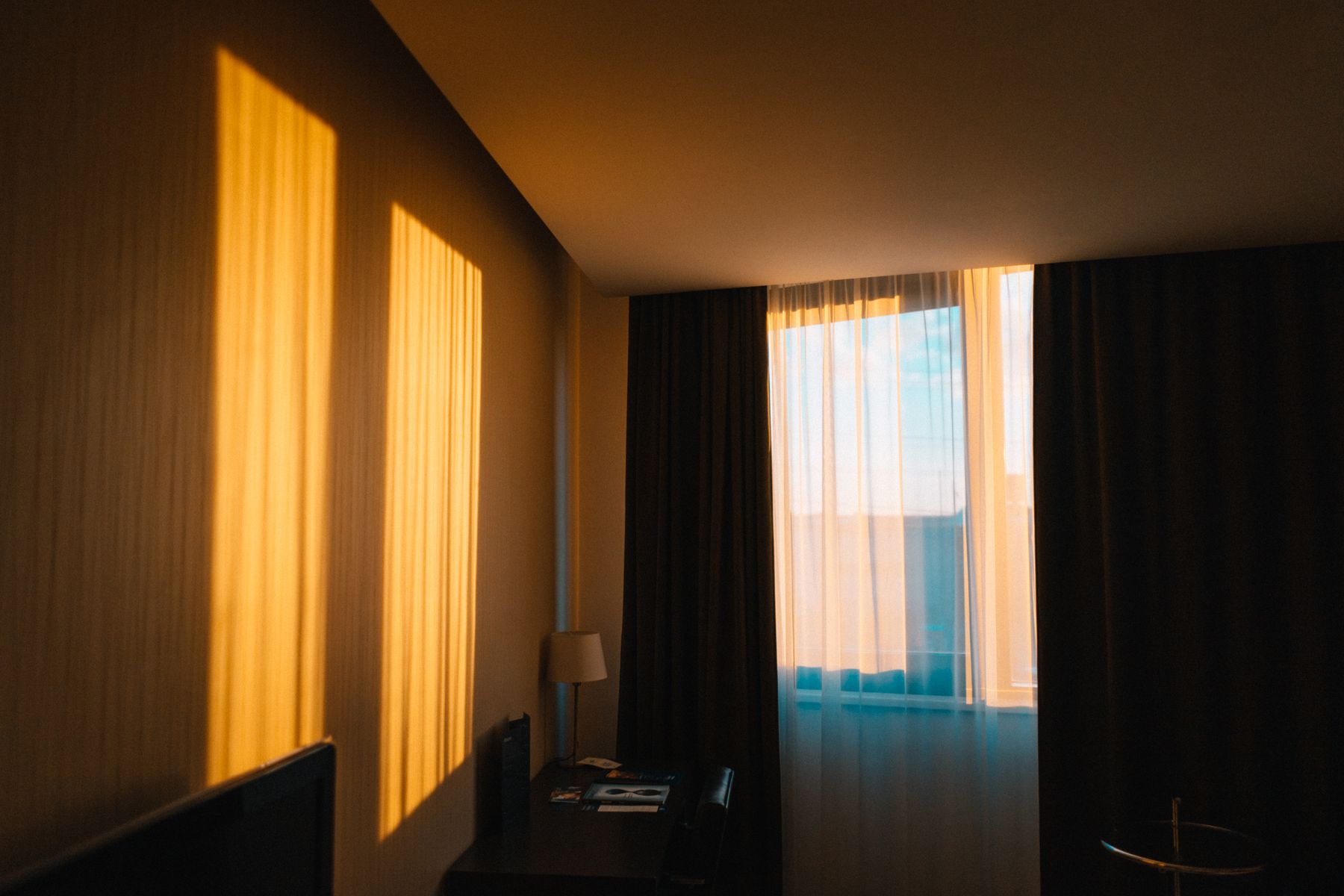
Another frequent issue is measuring at the window instead of where you actually sleep or work. A curtain can block light at the glass while still leaving a bright patch on the opposite wall. That patch matters because your eyes respond to overall scene brightness, not only the window area.
Many buyers also ignore the “edge problem.” Light travels through the path of least resistance, so even a 1–2 cm gap can create a visible beam. If the curtain uses a rod pocket, the top fold can leave a channel for light. If the curtain uses grommets, the mounting height and spacing can create a thin line of leakage.
Supporting factors include window coverings already in place. A thin blind behind the curtain can either help or interfere, depending on how it sits. Room surfaces matter too: white walls and glossy floors reflect stray light, raising the average lux even when the window looks dark. Weather and sun angle also change results; a measurement at 10:00 a.m. differs from one at 4:00 p.m.
How To Measure Real Light
Use Lux Readings At Eye Level
Start with illuminance measurements in lux at the location that matters. For sleep, that usually means near the pillow height, facing the window. Place your phone or lux meter at a consistent height and angle, then record readings with curtains closed and with curtains open.
Phone light sensors vary by model and calibration, so treat them as relative tools. If you use a phone, note the app version and keep it consistent; for example, “Light Meter” apps on iOS and Android often show different scaling, and a reading on one app may not match another. A mild aside: on one Android device (Android 14, sensor model not listed), the app’s lux values drifted by roughly 10–20% when the phone case was removed.
For a simple outcome target, compare the closed-curtain lux to the open-window lux. If open daylight reads 10,000 lux and closed curtains read 50 lux, the reduction is 99.5%. If open reads 2,000 lux on an overcast day and closed reads 80 lux, the reduction is 96%. Both are useful, but the absolute number changes with daylight conditions.
Map Light Leaks With A Flashlight
After you measure, locate the leak sources. In a dim room, shine a small flashlight around the curtain edges while the curtains are closed. Look for visible light lines at the sides, top seam, and bottom hem. Mark those spots with painter’s tape so you can adjust overlap and mounting.
Then repeat lux readings after each adjustment. If you add a draft stopper along the bottom or extend the curtain width by a few inches, you should see a measurable drop. This step often reveals that the fabric is fine, but the installation leaves a narrow escape route.
For top leaks, the curtain’s mounting method matters. A rod mounted outside the window frame usually creates better coverage than a rod mounted inside, because it increases overlap and reduces the chance of a direct light path. If your curtain uses a rod pocket, pulling it fully open across the rod can reduce the top fold channel.
Account For Room Reflectance
Two rooms with the same curtain can show different lux readings because walls reflect light. Measure at least two points: one near the window-facing wall and one toward the opposite side of the room. If the opposite side stays bright, reflectance and furniture placement may be amplifying stray light.
To interpret results, note the room’s baseline. Measure lux with the curtains open but with blinds closed, if you have them. That gives you a “window-only” reference without the full direct beam. Then measure with curtains closed over the same baseline. The difference between those two readings reflects the curtain system’s contribution.
A mild frustration: many product reviews mention “dark room” without stating whether the reviewer measured lux, used a flashlight test, or compared against a baseline. Without that context, the claim can’t be translated into your room.
Record Conditions And Repeat
Light control changes with sun angle, cloud cover, and time of day. Record the time, weather (clear, partly cloudy, overcast), and whether the window receives direct sun. Repeat measurements on two different days if you want a more stable estimate.
Use the same measurement routine each time: same point, same height, curtains fully closed, and no movement near the sensor. If you can, take a short series of readings and average them. Averages reduce the effect of brief sensor fluctuations.
As a practical note, lux meters are more consistent than phone sensors. If you borrow a basic lux meter for one weekend, you can calibrate your phone’s relative readings to a more stable reference. Even a rough calibration helps you compare future curtain adjustments without repeating the full process.
Educational Case Examples
Scenario 1: Bedroom With Side Gaps
A renter installs blackout curtains on a standard window. Initial lux readings at pillow height drop from about 8,000 lux (curtains open) to about 400 lux (curtains closed). The room still looks bright near the corners. A flashlight test reveals narrow side gaps where the curtain edge does not reach the wall. After extending the curtain width by adding a second panel and ensuring full overlap, the pillow-height lux drops to about 120 lux. The change comes from reducing edge leakage, not from fabric differences.
Scenario 2: Living Room With High Reflectance
A household measures light control in a living room with white walls and a glossy tile floor. With curtains closed, the window area looks dark, yet the opposite wall remains visibly lit. Lux readings show a smaller reduction on the far side: from about 1,500 lux (open) to about 250 lux (closed) on the far wall, while near-window readings drop from 1,500 lux to about 80 lux. The curtain blocks direct light, but reflections raise the average brightness. Adding a darker rug and moving the couch away from the window reduces far-wall lux by roughly 30–40% in a repeat measurement.
Checklist For Decision Support
| What To Check | How To Measure | What Good Looks Like | What To Fix If It Fails |
|---|---|---|---|
| Pillow-Height Lux | Measure lux with curtains open vs closed at pillow height | Large reduction and low absolute lux on the closed reading | Increase overlap, adjust mounting height, fix top/side gaps |
| Edge Leakage | Flashlight test along sides, top seam, and bottom hem | No visible light lines when viewed from inside | Add side overlap, use draft strips, extend curtain length |
| Far-Wall Brightness | Measure lux near the opposite wall with curtains closed | Far-wall lux drops close to near-window levels | Reduce reflectance, reposition furniture, add secondary coverage |
| Repeatability | Repeat measurements at two times of day | Consistent reduction pattern across conditions | Re-check mounting and overlap; sun angle may expose new gaps |
Common Mistakes To Avoid
Buying curtains by window width alone often fails because coverage depends on overlap. If you measure the window opening but ignore the wall-to-wall space and the curtain’s fullness, the edges can remain exposed.
Another mistake is cutting curtain length to “just reach the sill.” Light often leaks under the hem, especially on uneven floors or if the curtain sways. Leaving a small clearance for movement while still covering the floor line tends to perform better.
People also skip baseline measurement. Without a reading for open curtains under the same daylight conditions, you cannot judge whether a closed reading is low enough for your needs.
Finally, some buyers rely on a single measurement taken at the window. A curtain can reduce direct beam light while still leaving enough room brightness to disturb sleep for light-sensitive individuals. Measuring at the intended use location prevents that mismatch.
FAQ
What Lux Drop Counts As “Blackout”?
There is no universal lux threshold for “blackout” because daylight conditions vary. Use a relative reduction: compare closed vs open lux at the same point, then check whether the closed absolute lux matches your comfort for sleep or glare reduction.
Can A Phone Light Sensor Measure Curtains Reliably?
Phone sensors work for relative comparisons when you keep the same phone, app, and measurement position. For higher confidence, borrow a basic lux meter for one session to calibrate your phone’s readings.
Why Do Curtains Look Dark But The Room Still Feels Bright?
Stray light reflects off walls, floors, and furniture. Measuring at a far wall often shows higher lux than near the window, even when the window area appears dark.
Where Do Light Leaks Usually Start?
Most leaks occur at the top seam, sides where overlap is insufficient, and the bottom hem where light can enter under the curtain. A flashlight test along those edges usually reveals the path quickly.
Does Sun Angle Change Curtain Performance?
Yes. Direct sun can expose gaps that are not visible under diffuse light. Repeating measurements at different times of day helps you confirm that the installation works across angles.
Author's Insight
Real light control depends less on fabric marketing terms and more on geometry: overlap, mounting position, and the continuity of coverage at the top, sides, and bottom. Lux measurements at the intended use location translate curtain performance into a number you can compare before and after adjustments.
Because phone sensors vary, treat them as relative instruments unless you calibrate against a lux meter. A short measurement protocol—baseline open vs closed, plus a flashlight edge check—usually identifies the limiting factor within one afternoon.
Room reflectance can dominate perceived brightness, so far-wall measurements often explain “dark window, bright room” complaints. If you change only the curtain but not the room surfaces, the lux reduction can look smaller than expected.
Key Takeaways
- Measure lux at the pillow or work position, not only at the window.
- Edge gaps at the top, sides, and bottom often determine real performance.
- Use a baseline (curtains open or blinds closed) so you can interpret closed readings.
- Repeat measurements at different times to catch sun-angle leaks.
- Account for room reflectance by measuring near the far wall too.