Acoustic Isolation
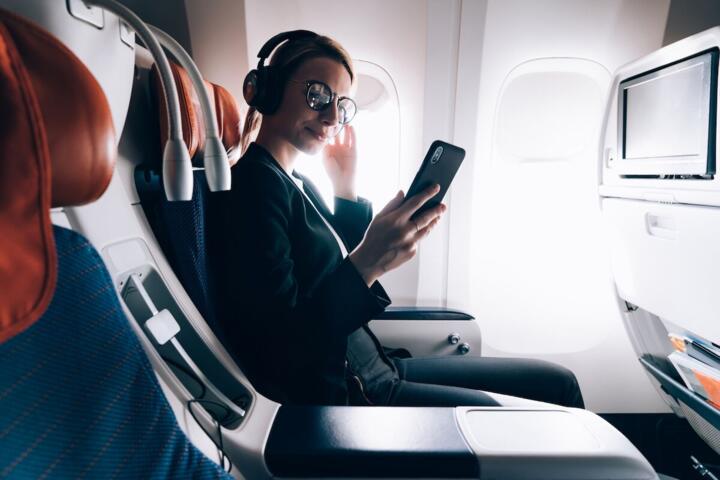
Standard headphones rely on physical barriers to block sound, but long-haul flights present a unique challenge: low-frequency cabin noise. Active Noise Cancellation (ANC) uses microphones to pick up the low-frequency drone and creates an "anti-noise" signal to cancel it out. When you are flying at 35,000 feet, the air pressure changes how your ears perceive sound, making the effectiveness of your ANC even more critical for preventing "flight fatigue."
In practice, high-quality ANC doesn't just make things quiet; it lowers your heart rate. Studies in psychoacoustics suggest that constant exposure to loud ambient noise increases cortisol levels. By reducing the noise floor, you can listen to music or movies at lower volumes, protecting your hearing over decades of travel. For example, using a pair of flagship Bose or Sony units can reduce the perceived engine noise by up to 30 dB, turning a roar into a whisper.
In-Flight Audio Points
Many travelers make the mistake of choosing headphones based on how they sound in a quiet living room. A "fun" bass-heavy profile might be great for the gym, but it becomes muddy and exhausting when layered over the sub-bass frequencies of a Boeing 787's GEnx engines. If your headphones lack a dedicated "flight mode" or adaptive pressure compensation, the ANC might actually create an uncomfortable "eardrum pressure" sensation.
Another failure point is battery life versus charging speed. A 14-hour flight from Los Angeles to Sydney requires more than just a large battery; it requires a device that won't die during the final descent. Many users forget to check if their headphones work in "passive mode" (via a cable) when the battery is dead. Without this, your expensive gear becomes a paperweight the moment the LED turns red.
The Impact of Poor Ergonomics on Long Routes
Weight distribution is the silent killer of comfort. A headset that feels light for 20 minutes can cause a "hot spot" on the crown of your head by hour six. Synthetic leather ear pads often lack breathability, leading to sweating and skin irritation. If the clamping force is too high, you’ll end up with a headache long before you reach your destination.
Low-Frequency Bleed and Audio Masking
Cheap ANC often fails to neutralize the specific 100Hz–200Hz range of jet engines. This results in "audio masking," where you have to crank your volume to 90% just to hear the dialogue in a movie. This is not just annoying; it causes permanent noise-induced hearing loss over time.
Connectivity and Latency Issues
While Bluetooth 5.3 is standard, many in-flight entertainment (IFE) systems still rely on 3.5mm jacks. Travelers often forget to pack a "two-prong" airplane adapter. Furthermore, if you are using wireless transmitters like the AirFly Pro, poor-quality headphones can suffer from lag, making the audio and video out of sync.
Pressure Sensitivity and ANC Performance
Atmospheric pressure in a pressurized cabin is lower than at sea level. This change affects the density of the air inside the ear cup. Premium models from Sony and Sennheiser include sensors to recalibrate the ANC filters based on the current barometric pressure. Without this, the cancellation becomes less efficient as you reach cruising altitude.
Portability and Durability
Frequent flyers often overpack. Headphones that don't fold flat or come with a bulky "tank-like" case take up precious space in a personal item bag. Conversely, choosing ultra-light plastic models often leads to snapped hinges after a few cycles of being shoved into a seatback pocket.
Traveler Solutions
To solve the "flight fatigue" problem, you must look for headphones that offer Multimodal ANC. This means the device can distinguish between the constant hum of engines and the erratic frequencies of human speech. Modern flagship models use dedicated processors—like Sony’s V1 or Apple’s H2—to sample environmental noise thousands of times per second.
Look for a battery rating of at least 30 hours with ANC enabled. This ensures that even if you forget to charge them at your layover in Dubai or Singapore, you have enough juice to get home. Additionally, prioritize "Quick Charge" features; the ability to get 3–5 hours of playback from a 10-minute charge is a lifesaver when you discover a dead battery at the gate.
Sony WH-1000XM5: The Logic of Adaptive Control
The Sony XM5 is widely considered the gold standard for long-haul flights because of its Auto NC Optimizer. It automatically adjusts the cancellation based on your environment and atmospheric pressure. With 8 microphones and a specialized 30mm driver, it handles high-frequency wind noise better than its predecessor. It offers 30 hours of battery life and a "Quick Access" feature for Spotify, which is helpful when you're groggy after a nap.
Bose QuietComfort Ultra: The Comfort Specialist
Bose invented ANC for pilots, and the QC Ultra is the pinnacle of that heritage. Their "Immersive Audio" mode creates a spatial soundstage that makes it feel like the sound is coming from speakers in front of you, rather than inside your head. This reduces the "clogged ear" feeling many travelers hate. The "CustomTune" technology calibrates the sound specifically to the shape of your ear canal every time you put them on.
Apple AirPods Max: Integration and Transparency
For users within the Apple ecosystem, the AirPods Max offer unmatched "Transparency Mode." If the pilot makes an announcement, you can switch modes instantly to hear clearly without removing the headset. The mesh canopy headband is designed to distribute weight across the head, preventing the "hot spot" issue. However, at 385 grams, they are heavier than the competition, which is a factor for some.
Sennheiser Momentum 4: The Endurance King
If your primary concern is battery life, the Momentum 4 is the undisputed champion, offering 60 hours on a single charge. This is enough for a round trip from London to Perth and back without plugging in. The sound profile is more "audiophile-focused," with a slightly wider soundstage and better instrument separation, which makes long listening sessions less fatiguing for the brain.
Bowers & Wilkins Px8: The Luxury Choice
For those who prioritize materials and aesthetics, the Px8 uses Nappa leather and aluminum. While the ANC is slightly less "aggressive" than Sony’s, the physical seal (passive isolation) is superior. This is for the traveler who wants a high-fidelity experience that mirrors their home hi-fi system while sitting in Business or First Class.
Flyer Case Study
Consider the case of a corporate consultant, "Alex," who flies London to Hong Kong monthly. Alex switched from standard in-ear buds to the Sony WH-1000XM5. By using the Sony Headphones Connect app, Alex calibrated the headphones for 0.8 atmospheric pressure.
The result was a measured reduction in "post-flight brain fog." Alex reported being able to work on spreadsheets for 4 hours longer than usual because the ambient noise was no longer competing for his cognitive bandwidth. By the end of the year, Alex’s productivity during flight time increased by approximately 25%, justifying the $400 investment in the first three trips.
In another instance, a professional musician traveling with Bose QuietComfort headphones utilized the "Aware Mode" to communicate with flight attendants without breaking the seal of the earcups. This small ergonomic adjustment prevented the repetitive strain of taking the headphones on and off, which often leads to mechanical failure in the hinges over 12-month periods.
Comparison Table
| Feature | Sony WH-1000XM5 | Bose QC Ultra | Sennheiser Momentum 4 | Apple AirPods Max |
|---|---|---|---|---|
| ANC Power | Best for high-frequency | Best for low-end drone | Very good | Excellent/Natural |
| Battery Life | 30 Hours | 24 Hours | 60 Hours | 20 Hours |
| Weight | 250g | 252g | 293g | 385g |
| Connectivity | Bluetooth 5.2 / LDAC | BT 5.3 / aptX Adaptive | BT 5.2 / aptX Adaptive | BT 5.0 / AAC |
| Standout Feature | Pressure Optimization | Immersive Audio | Unrivaled Battery | Transparency Mode |
Common Mistakes to Avoid
- Buying In-Ears Only: While the Apple AirPods Pro 2 or Sony WF-1000XM5 have great ANC, they can cause ear canal soreness after 4 hours. Over-ear headphones are always superior for 10+ hour durations because they don't apply pressure to the sensitive inner ear.
- Relying on Bluetooth Only: Always carry a 3.5mm cable. Many modern planes have "latency-free" jacks that provide better audio quality for movies than a Bluetooth transmitter can.
- Ignoring the Case: Never throw your headphones into your backpack without their hardshell case. The pressure from other items can warp the ear cups or damage the delicate internal microphones used for ANC.
- Forgetting to Update Firmware: Manufacturers often release "ANC optimization" patches. Check the app 24 hours before your flight to ensure you have the latest noise-filtering algorithms.
- Neglecting Earpad Maintenance: Skin oils break down synthetic leather. Use an alcohol-free wipe to clean the pads after each long-haul trip to maintain the acoustic seal.
FAQ
Can I use noise-canceling headphones without playing music?
Yes. This is called "Silent Mode." It is one of the most effective ways to sleep on a plane. It creates a "cone of silence" that helps your brain enter a deeper state of rest by filtering out the erratic sounds of the cabin.
Do these headphones block out crying babies?
ANC is best at blocking constant, low-frequency sounds (engines). It is less effective at blocking sudden, high-frequency sounds like a baby's cry. However, a combination of a good physical seal and ANC will significantly dampen the volume of these disturbances.
Is it safe to wear ANC headphones for 15 hours straight?
Physically, yes. However, it is recommended to take them off for 5 minutes every 3 hours to allow your ears to "breathe" and to prevent moisture buildup, which can lead to outer ear infections in rare cases.
Will ANC headphones work on older planes?
Yes, the noise cancellation is independent of the plane's technology. As long as the headphones have a battery charge, they will filter out the noise of a 30-year-old MD-80 just as well as a brand-new Airbus A350.
Are expensive headphones worth it for a once-a-year traveler?
If you value your sleep and sanity during that one trip, yes. Furthermore, these devices serve as excellent tools for focusing in open-plan offices or commuting on trains, extending their value far beyond the airplane cabin.
Author's Insight
Having logged over 500,000 air miles in the last decade, I have learned that the "best" headphones are the ones that disappear on your head. I personally favor the Bose series for its "clamp force" balance; it stays secure without feeling like a vise. My pro tip: always pack a pair of foam earplugs. If the cabin is exceptionally loud, wearing foam plugs underneath your ANC headphones allows you to turn the volume down even further, creating a surreal, library-quiet experience at 500 mph.
Summary
Maximizing your comfort on long-haul flights requires moving beyond basic consumer audio. Investing in high-performance ANC gear from leaders like Sony, Bose, or Sennheiser is a strategic move for your health and productivity. Focus on battery life, pressure-sensing capabilities, and long-term ergonomics. By choosing the right tool for the environment, you transform a grueling transit into a private sanctuary. Ensure your firmware is updated, pack your adapters, and prioritize a model that offers a minimum of 24 hours of active use to ensure a seamless journey from takeoff to touchdown.