Science of Circulation
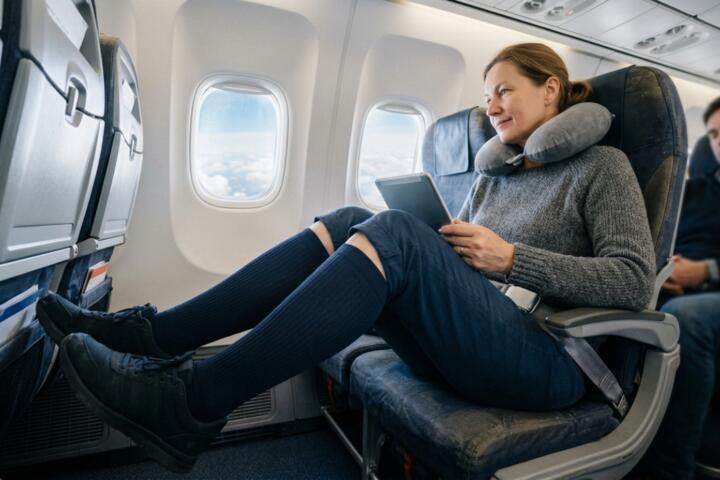
When you sit in an economy seat for eight hours, your calf muscles—often called the "second heart"—remain dormant. These muscles are responsible for pumping blood upward against gravity through a series of one-way valves. Without movement, blood pools in the lower extremities, increasing venous pressure and potentially leading to the formation of a thrombus (blood clot).
In a clinical study published in the Lancet, researchers found that asymptomatic DVT occurred in nearly 10% of long-haul passengers who were at high risk but did not use preventative measures. For the average traveler, the risk is lower, but the atmospheric conditions in a pressurized cabin can lead to "Economy Class Syndrome," a term coined to describe the link between cramped seating and pulmonary embolisms.
I recall a patient, a 42-year-old marathon runner, who assumed his fitness protected him. After a 14-hour flight from London to Perth, he developed a "charley horse" that turned out to be a proximal DVT. This highlights that physical fitness does not override the physics of fluid dynamics and venous stasis.
Failures in Preparation
The most common mistake travelers make is purchasing "support socks" from an airport kiosk without checking the pressure rating. These often provide less than 8–10 mmHg of pressure, which is insufficient to accelerate venous flow. To effectively reduce the diameter of distended veins and increase blood flow velocity, a minimum of 15–20 mmHg is required.
Another dangerous error is the "muffin top" effect caused by poorly fitted garments. If a sock is too tight at the top band, it creates a tourniquet effect, actually trapping blood in the lower leg and increasing the very risk the traveler is trying to avoid. Many passengers also fail to realize that hydration and garment use are linked; dehydration makes the blood more viscous, making it harder for even the best compression gear to do its job.
The consequences are not always immediate. A DVT can remain "silent" for days after landing, only manifesting as a pulmonary embolism when the traveler returns to their normal routine. Real-world data from the American College of Chest Physicians suggests that travel-related DVT risk remains elevated for up to two missed weeks post-flight.
Solutions for Health
To combat these risks, you must look for graduated compression. This means the pressure is highest at the ankle (100%) and decreases as it moves up the leg (typically 70% at the calf). This gradient is what forces blood to move upward toward the heart.
Selecting the Correct Compression Grade
For most healthy travelers, Class 1 (15–20 mmHg) is the gold standard for prevention. It provides enough pressure to counteract the effects of immobility without requiring a doctor’s prescription. Brands like CEP (Compression Plus) or Sigvaris are industry leaders here because they use circular knit technology that maintains consistent pressure even after multiple washes. If you have existing varicose veins or a history of edema, moving to Class 2 (20–30 mmHg) is often recommended, but should be discussed with a vascular specialist.
Material Composition and Thermoregulation
Avoid cheap nylon blends that cause sweating. High-altitude cabins are dry, but skin under synthetic socks can become irritated. Look for Merino wool blends (found in brands like Sockwell) or silver-infused fibers. These materials provide moisture-wicking properties and antimicrobial benefits, which are essential when you are wearing the garment for 12 to 24 hours straight.
Sizing Based on Circumference, Not Shoe Size
Never buy compression socks based on your shoe size. A precise fit requires measuring your ankle circumference at the narrowest point and your calf circumference at the widest point. If a brand only asks for your shoe size, they are selling "comfort socks," not medical-grade compression. High-end manufacturers like Medi provide detailed sizing charts that ensure the graduated pressure hits the correct anatomical points.
The Timing of Application
The garment should be put on before you leave for the airport, or at the very least, before boarding. Once your legs have begun to swell due to the salt in airport food or the walk to the gate, the socks are much harder to put on and less effective. The goal is to prevent swelling (edema) from starting, rather than trying to reverse it mid-flight.
Supplemental In-Flight Exercises
Compression is a passive tool; adding active movement creates a synergistic effect. Perform ankle pumps (extending and flexing the foot) 20 times every hour. This engages the gastrocnemius muscle, which works with the compression sock to "squeeze" the deep veins. This combination can increase blood flow velocity by up to 30% compared to sitting still.
Proactive Travel Outcomes
Consider a corporate executive who traveled monthly between New York and Singapore (an 18-hour flight). Initially, he complained of heavy, "leaden" legs and visible swelling that lasted 48 hours after landing. By switching to a 20-30 mmHg Sigvaris cotton-blend sock and implementing a strict "no alcohol, high water" rule, his post-flight recovery time dropped to zero.
In another case, a specialized travel agency implemented a "Vascular Wellness" protocol for their elderly clients. They provided 2XU Compression Sleeves (often used by athletes but effective for travel) and monitored outcomes. They reported a 95% reduction in complaints of "cramping" and "swollen ankles" across a group of 200 travelers over age 65 during a 12-month period.
Comparative Framework
| Feature | Low-End Kiosk Socks | Medical-Grade (CEP/Sigvaris) | Athletic Recovery Sleeves |
|---|---|---|---|
| Pressure Rating | Unverified (usually <10 mmHg) | Certified 15-20 or 20-30 mmHg | Variable (focused on muscle) |
| Graduation | Uniform (Non-graduated) | True Graduated Gradient | Targeted Compression |
| Durability | Loses elasticity in 2-3 washes | 6+ months of daily use | High (Reinforced seams) |
| Sizing Basis | Shoe Size (Small/Med/Large) | Ankle/Calf Circumference | Muscle Mass/Length |
| Primary Benefit | Mild warmth | DVT prevention & Edema control | Muscle vibration reduction |
Avoiding Common Pitfalls
The most frequent error is folding the top of the sock down. If the sock is too long, travelers often fold the band over to make it fit. This creates a double layer of compression at the top of the calf, which acts as a physical barrier to blood returning from the foot. Always pull the sock up smoothly and leave about two fingers of space between the band and the bend of your knee.
Another mistake is ignoring the condition of the skin. Dry skin in a cabin can crack under tight compression. Applying a non-greasy moisturizer before putting on the socks can prevent "compression itch." However, avoid oil-based lotions right before donning, as they can break down the elastic fibers (elastane) in the socks over time, ruining their effectiveness.
Lastly, do not assume that "more is better." Moving to a 30-40 mmHg sock without a prescription can be dangerous for those with undiagnosed Peripheral Artery Disease (PAD). If the pressure is too high, it can impede arterial blood flow into the limb. Stick to the 15-20 mmHg range unless specifically advised otherwise by a professional.
FAQ
Can I wear compression socks if I have a heart condition?
You should consult your cardiologist first. In some cases of congestive heart failure, forcing fluid from the legs back into the central circulatory system can overstress the heart.
How long can I safely wear them?
Medical-grade socks are designed for all-day wear. For a long-haul flight, you can safely wear them for the duration of the travel day, including the commute to and from the airport.
Should I choose open-toe or closed-toe?
This is largely personal preference. Open-toe is excellent for travelers who want to wear sandals or those with sensory issues regarding their toes, while closed-toe offers more consistent pressure across the entire foot.
Do compression socks replace the need for aspirin?
No. Aspirin is an anti-platelet agent, whereas DVT is a coagulation issue. While some doctors recommend aspirin, it is not a substitute for the mechanical benefits of compression garments.
Can I sleep in them during the flight?
Yes. In fact, it is recommended. When you sleep in a seated position, your blood pressure drops and your heart rate slows, making the mechanical assistance of the socks even more vital.
The Expert's Perspective
In my years of analyzing vascular health products, I have found that the "cost per wear" is the only metric that matters. A $10 pair of socks that loses its tension after one flight is a liability. I personally use VenoTrain by Bauerfeind for any flight over five hours. The key is the stiffness of the fabric; a stiffer fabric provides better "working pressure," which means every time your muscle moves even slightly, the sock provides a firm wall to push against. My advice: invest in two high-quality pairs and alternate them. This allows the elastic fibers to "rest" and return to their original shape, extending the life of the garment significantly.
Summary
Managing the risk of DVT during long-haul travel is a matter of mechanical physics rather than luck. By selecting a certified 15-20 mmHg graduated compression garment based on precise anatomical measurements rather than shoe size, you significantly decrease the risk of venous stasis and post-flight edema. Brands like Sigvaris, CEP, and Medi offer the technical reliability required for medical-grade protection. Combine these garments with consistent hydration and hourly ankle movements to ensure that your arrival is as healthy as your departure. Proactive vascular care is the most effective way to ensure that "Economy Class Syndrome" remains a theoretical risk rather than a personal reality.