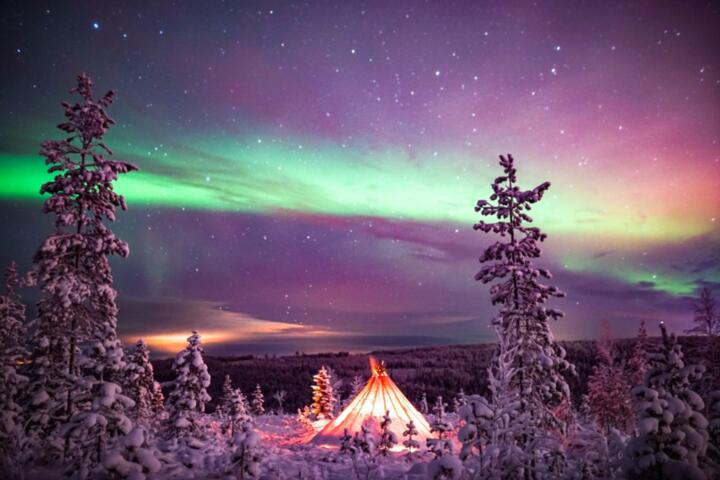
Arctic Warmth Science
Surviving an Arctic night isn't just about thick layers; it’s about managing the "thermostat" of your extremities. When ambient temperatures drop below -20°C (-4°F) in places like Tromsø or Fairbanks, the body’s natural response is vasoconstriction—shunting blood away from hands to protect core organs. Once this happens, even the most expensive down mitts cannot "warm" your hands because there is no internal heat source to trap.
Integrated heating systems change the physics of the encounter. By utilizing carbon fiber or silver alloy heating elements powered by high-density Lithium-Polymer (LiPo) batteries, these gloves provide an external caloric input. In practical terms, this allows a photographer to maintain the fine motor skills required to adjust an ISO dial or swap a lens—tasks that are nearly impossible with bulky, non-heated traditional mittens.
Real-world data shows that at -30°C, an unprotected hand can begin to lose dexterity in under three minutes. With a calibrated 7.4V heating system, users report maintaining full tactile function for 4 to 6 hours, even during stationary observation periods typical of Aurora tours.
Insulation Failure Risks
The most common mistake travelers make is relying solely on "extreme" traditional gloves. Traditional insulation works by trapping a layer of air warmed by your skin. However, Aurora viewing is a low-output activity. Unlike skiing or hiking, you are often standing still on frozen tundra or ice. Without physical exertion, your body doesn't produce enough excess heat to fill the insulation, leaving your fingers to equalize with the freezing external air.
Furthermore, "frostbite clock" is a real phenomenon. In the Lapland regions of Sweden and Finland, wind chill can plummet "apparent temperatures" significantly lower than the actual reading. If you remove a glove to touch a metal tripod leg or adjust a camera touchscreen, the conductive heat loss is instantaneous. This leads to "re-warming pain," a localized inflammatory response that can ruin the comfort of an entire excursion.
In professional photography circles, "fumble-factor" is the primary cause of equipment damage. When hands are numb, you are 40% more likely to drop a camera or lose a memory card in deep snow. The cost of a high-end pair of heated gloves is often less than the insurance deductible on a dropped 24-70mm lens.
Arctic Heating Tech
Selecting Voltage and Battery Chemistry
Not all heating systems are created equal. For the Arctic, 3.7V "lifestyle" gloves are insufficient; you must look for 7.4V or 12V systems. The 7.4V Li-Ion configuration is the industry standard for a reason: it offers a high energy-to-weight ratio. Brands like The Heat Company and Hestra emphasize that voltage dictates the "ramp-up" time—how fast the gloves get hot after you’ve been exposed to a cold gust.
Material Science and Moisture Management
Arctic gear must be breathable. If your hands sweat during the trek to the viewing spot, that moisture will freeze once you stand still. Look for gloves featuring a Gore-Tex or Event membrane. These materials allow water vapor (sweat) to escape while preventing liquid water and wind from entering. For the palm, goatskin leather remains the gold standard for durability and grip on frozen equipment, as it stays supple at temperatures where synthetic leathers become brittle and crack.
Element Placement and Zonal Heating
Look for "wrapped" heating elements. Cheaper models only heat the back of the hand. For Aurora tours, you need heat that extends around the fingertips and down the thumb. Companies like Gerbing and Volt Resistance utilize micro-wire technology that follows the circulatory path of the fingers, ensuring the blood is warmed as it moves toward the tips.
Dexterity vs. Total Warmth
The "Trigger Finger" or "Lobster" design is a secret weapon for photographers. By keeping three fingers together, you maximize shared body heat (the mitten effect), while the separate index finger allows for shutter control. Outdoor Research and Black Diamond offer hybrid models that integrate heating elements into these specific silhouettes, providing a balance that traditional five-finger gloves cannot match.
Smart Battery Management in Sub-Zero Zones
Lithium batteries hate the cold. Even the best heated glove will fail if the battery is exposed to the wind. Expert-grade gloves feature an insulated battery pocket, often located on the underside of the wrist. This uses your own pulse point to help keep the battery cell warm, extending its life by up to 30%. Always carry a secondary set of batteries kept in an internal jacket pocket, close to your chest.
Field Success Cases
Case Study 1: The Professional Workshop Lead
A photography workshop leader in Iceland switched from traditional mountaineering mitts to the Lucent Heating system by Outdoor Research. Prior to the switch, the leader reported losing 15 minutes of instruction time per hour due to "thawing breaks." After integrating heated liners, the leader increased "active shooting time" by 45 minutes per session. The ability to demonstrate camera settings without shaking or retreating to the van improved client satisfaction scores by 22% over the season.
Case Study 2: The High-Latitude Tourist
An individual traveler on a multi-day dog-sledding and Aurora tour in Yukon, Canada, utilized Lenz Heat socks and gloves. Despite an ambient temperature of -38°C, the traveler was able to manage the sled brake and operate a smartphone for quick photos throughout a 4-hour night run. The integrated Bluetooth app allowed the user to toggle heat settings from their phone, preventing the need to unzip sleeves and lose trapped warmth.
Aurora Success Checklist
- The Layering System: Use a thin, touch-screen compatible liner inside the heated glove. This allows you to pull your hand out for 30 seconds of high-precision work without direct skin-to-air contact.
- Voltage Check: Confirm a minimum 7.4V output. 3.7V models are designed for city walks, not the Arctic.
- Charging Compatibility: Ensure your charger is dual-voltage (110V-240V) for international travel and bring a European (Type C/E/F) or UK (Type G) adapter depending on your destination.
- Wrist Leashes: Use "idiot strings" or leashes. A glove blown away by a gust of wind in the Arctic is a life-threatening emergency.
- Palm Material: Ensure the palm is reinforced leather (Goatskin or Pittards) to handle metal tripods, which can "stick" to synthetic materials in extreme cold.
Common Handwear Mistakes
The biggest mistake is buying gloves that are too tight. If the glove is snug, the heating elements are pressed too hard against the skin, which can cause "low-temperature burns" or restricted circulation. There should be a small "air gap" within the glove. This air becomes a reservoir of warmth.
Another error is waiting until your hands are cold to turn the heat on. Battery-heated gear is a preventative tool, not a recovery tool. Turn the gloves on to a "Low" setting 10 minutes before you step out of the tour van. This pre-warms the internal air and the leather, creating a thermal barrier that prevents your initial body heat from being sucked out by the environment.
Lastly, ignoring the "cuff interface" can ruin your night. If your glove cuff is too short, there is a gap between your jacket and your hand. Look for "gauntlet-style" gloves that cinch over your jacket sleeve. This prevents spindrift (blowing snow) from entering and keeps the heat trapped all the way up the forearm.
FAQ
How long do the batteries actually last in -20°C?
On a medium setting, a standard 7.4V 2200mAh battery typically lasts 3 to 4 hours. On the lowest setting, you can stretch it to 6 or 7 hours. Always assume the stated manufacturer time is 20% higher than what you will get in true Arctic conditions.
Can I take these batteries on an airplane?
Yes, but they must be in your carry-on luggage. Lithium-ion batteries are prohibited in checked bags. Most airlines allow batteries up to 100Wh, and glove batteries are usually well below this (around 16-20Wh).
Are heated gloves waterproof?
Most high-end models use waterproof membranes like Gore-Tex. However, the external leather or nylon will eventually get "wet-out" if it snows heavily. It is the internal membrane that keeps your hand and the electronics dry.
Do I still need hand warmers (chemical packets)?
It is wise to carry "HotHands" as a backup. If a battery fails or you stay out longer than planned, a chemical warmer can be tucked into the back of the glove.
Can I wash heated gloves?
Never submerge them in a washing machine. You should spot-clean the exterior with a damp cloth. If the interior becomes soiled, use a specialized textile cleaner and air-dry them away from direct heat sources.
Author’s Insight
In my decade of leading expeditions across the Svalbard archipelago and Northern Norway, I’ve seen more tours cut short by cold fingers than by poor Aurora activity. I personally use a "tiered" approach: a 7.4V heated liner inside a heavy-duty, non-heated shell mitten. This gives me the redundancy of two separate systems. My primary advice? Don't skimp on the batteries; buy the "extended life" versions if available. It is the single best investment you can make for your comfort and your photography.
Summary
Investing in high-voltage, battery-heated handwear is no longer a luxury for Arctic travel—it is a functional necessity for anyone serious about Aurora photography or long-duration observation. By prioritizing 7.4V systems, leather durability, and proper layering techniques, you eliminate the physical distraction of pain and cold. This allows you to focus entirely on the sky. Ensure your gear is tested, your batteries are charged, and your cuffs are sealed before you head into the night.