The Evolution of Portable Hydration in Aviation
The modern airport experience is a gauntlet of logistical friction, and hydration is often the first casualty. Traditional rigid bottles, while durable, are the "dead space" enemies of one-bag travelers. When empty, a standard 32oz vacuum-insulated flask still occupies nearly 1.5 liters of volumetric space in a backpack. In contrast, a foldable alternative compresses to approximately 20% of its expanded size.
Practically speaking, this means the difference between fitting a laptop charger in your side pocket or leaving it behind. In a recent audit of international terminal amenities, over 85% of major hubs like Heathrow (LHR) and Dubai International (DXB) have installed high-speed filtered water stations. By utilizing a collapsible vessel, travelers can save an average of $6 to $9 per flight segment while reducing single-use plastic waste by approximately 0.5kg per round trip.
Practical Performance Standards
A truly "airport-ready" bottle isn't just flexible; it must be structurally sound. An expert traveler looks for a "standing" architecture—bottles that maintain their upright posture even when only 25% full. This prevents the dreaded "floppy bottle" syndrome at the filling station, where a lack of rigidity leads to spills and contamination of the nozzle.
Critical Friction Points: Why Most Travel Bottles Fail
The most common mistake travelers make is prioritizing "thinness" over seal integrity. Many entry-level silicone bags use cheap friction-fit caps that fail under the pressure fluctuations of a pressurized aircraft cabin. At 35,000 feet, the air inside your bottle expands; if the seal isn't rated for pressure differentials, you risk a "shampoo explosion" equivalent across your electronics.
Furthermore, material choice dictates the longevity of the water's taste. Low-grade polymers often leach a "plastic" flavor into the water after sitting in a warm terminal for two hours. This is particularly problematic during long-haul layovers where hydration is vital for combating jet lag and mucosal dryness.
Another overlooked pain point is the "filling hygiene" factor. Many airports have recessed water spouts that are difficult to reach with wide-bodied rigid containers. A flexible bottle with a narrow, reinforced neck allows for easier access to these awkward dispensers, ensuring you actually get a full liter of water before boarding.
Precision Solutions for the Modern Passenger
To optimize your airport hydration strategy, you must match the bottle's mechanical design to your specific travel style.
Selecting the Right Material Composition
Medical-grade silicone is the gold standard for durability and heat resistance, but for those concerned with weight, TPU (Thermoplastic Polyurethane) offers a lighter profile. TPU is often used in hydration bladders for elite marathoners and is highly resistant to punctures.
- Recommendation: Look for BPA-free, food-grade silicone with a thickness of at least 2mm to ensure the bottle doesn't collapse while you're drinking.
- The Result: A vessel that can withstand being crushed in an overhead bin without springing a leak.
Advanced Sealing Mechanisms
Do not rely on "pop-top" lids. The ideal airport bottle features a triple-thread screw cap or a dual-locking flip top. This ensures that even if a heavy "personal item" bag is shoved on top of the bottle, the pressure won't force the cap open.
- Actionable Advice: Test your bottle by filling it, sealing it, and standing on it (gently) at home. If it hisses, it will leak in the air.
Volumetric Efficiency and Clip Systems
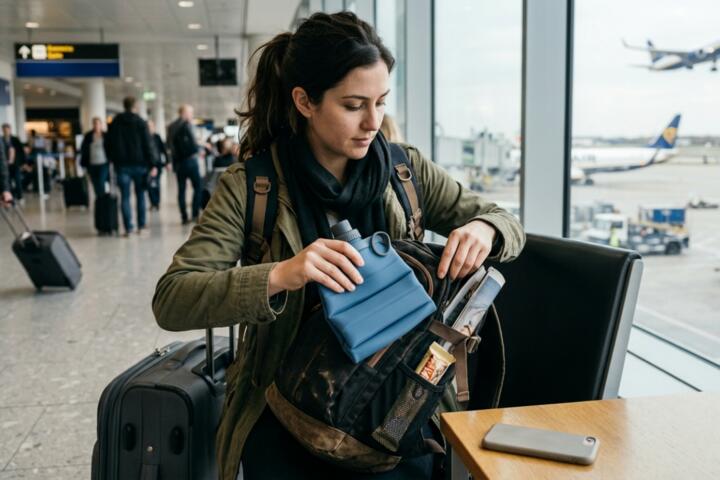
The best designs include an integrated carabiner or a heavy-duty silicone strap. This allows the bottle to be clipped to the exterior of a backpack during the walk through the terminal, then rolled and tucked inside the seatback pocket once on the plane.
- Data Point: A rolled 750ml bottle typically measures 3x4 inches, making it smaller than a standard pair of rolled socks.
Temperature Regulation and Condensation
One downside of flexible bottles is the lack of insulation. To prevent condensation from soaking your boarding pass or passport, look for "sweat-proof" sleeves or choose models with thicker walls.
- Hack: Fill your bottle with 1/3 water and freeze it flat the night before (if staying at a hotel). TSA allows frozen liquids as long as they are solid ice when passing through the scanner.
Maintenance and Microbial Resistance
Airports are high-germ environments. A bottle with a wide-mouth opening (at least 53mm) allows for thorough cleaning and quick drying between trips.
- Specific Tool: Use a "Bottle Bright" effervescent tablet after every long trip to eliminate any biofilm buildup without needing a scrub brush.
Real-World Case Studies in Efficient Travel
Case Study 1: The Business Consultant
A consultant traveling weekly between New York (JFK) and London (LHR) switched from a standard stainless steel bottle to a HydraPak Stash 750ml.
- The Problem: The heavy steel bottle added 0.5kg to their carry-on and took up room needed for a secondary tablet.
- The Solution: The Stash bottle collapses down to the size of a hockey puck when empty.
- The Result: Saved 400g in carry-on weight and gained enough space for a portable power bank. Over 12 months, the traveler saved roughly $350 by avoiding airport water purchases.
Case Study 2: The Family of Four
A family traveling through Orlando (MCO) during peak season struggled with carrying four bulky bottles through security and the theme parks.
- The Problem: Managing four rigid bottles meant carrying an extra dedicated "water bag."
- The Solution: They equipped each family member with a Nomader Collapsible Water Bottle. These bottles have a rigid sleeve that makes them feel like a real glass, providing stability for the kids.
- The Result: Once through security, the bottles were filled. When boarding, the empty bottles were rolled up and tucked into the side pockets of the children's small backpacks, eliminating the need for the extra carry-all bag.
Comparison Checklist for Airport Hydration Tools
| Feature | Silicone Roll-Up | TPU Flattenable | Rigid-Flex Hybrid |
|---|---|---|---|
| Best For | Heavy-duty use | Ultralight backpacking | Everyday comfort |
| Space Savings | High (rolls up) | Extreme (lays flat) | Moderate (telescopes) |
| Durability | Excellent | Good (puncture risk) | Very High |
| Stability | Moderate | Low | Excellent |
| Weight | 150g - 200g | 50g - 100g | 200g+ |
The "Gate-Ready" Checklist
- Empty before the line: Ensure no residual liquid remains; TSA scanners are sensitive to even 50ml.
- Cap off or Loose: Keep the cap slightly loose during the scan to show there is no hidden pressure/liquid.
- Identify the "Hydration Hub": Use apps like Refill or Watering to find the nearest free filtered station post-security.
- Dry the exterior: After filling, wipe the bottle to prevent moisture from damaging items in your bag.
Common Strategic Errors to Avoid
Many travelers buy "bellows-style" accordion bottles. While they look clever, the ridges are notoriously difficult to clean and often harbor mold in the folds. Furthermore, they tend to be unstable when half-full, causing them to tip over on the small airplane tray tables.
Another error is ignoring the "Clip-on" factor. If a bottle doesn't have a way to attach to the outside of your bag, it will inevitably end up at the bottom of your backpack, making you less likely to stay hydrated because it’s a hassle to retrieve. Always opt for a model with a reinforced eyelet or an included carabiner.
Avoid bottles with complex straw mechanisms for airport travel. The pressure changes in the cabin can turn a straw into a fountain, spraying your seatmate when you flip the valve open. Stick to simple screw-top or bite-valve designs that can be manually vented.
FAQ: Navigating Airport Hydration
Are collapsible bottles really allowed through TSA?
Yes, provided they are completely empty. The material (silicone, TPU, or PE) does not interfere with X-ray imaging. It is often helpful to place the empty, flattened bottle in its own bin or on top of your bag to show transparency.
Do these bottles smell or taste like chemicals?
Higher-end brands like Vapur or Katadyn use taste-free films. To ensure a neutral taste, soak a new bottle in warm water with a teaspoon of baking soda for two hours before your first flight.
Can I put hot tea or coffee in them?
Silicone models can generally handle temperatures up to 200°C, making them safe for hot liquids. However, TPU bottles are usually limited to 60°C. Check the manufacturer's specs before using them for your pre-flight caffeine.
How do I prevent the bottle from leaking in my bag?
Always perform a "squeeze test" after filling. Also, ensure the threads of the cap are dry before sealing; moisture on the threads can wick outward, creating the illusion of a leak.
What is the best capacity for air travel?
The "sweet spot" is 750ml to 1 Liter. This provides enough hydration for a 4-hour flight without being so heavy that it becomes a burden during a terminal transfer.
Author's Insight
In my experience crossing through over 40 international hubs, the single most important feature isn't the foldability—it's the mouthpiece hygiene. Airports are high-traffic zones for pathogens. I prefer bottles with a protective cap that covers the entire drinking surface, like the CamelBak Eddy+ filtered series or the Vapur Eclipse. My personal pro-tip: always fill your bottle at the "Pet Relief" areas if the main terminal stations are crowded; they often have the exact same filtered dispensers and zero wait time.
Conclusion
Investing in a high-quality collapsible water bottle is a tactical upgrade for any frequent traveler. By choosing a vessel based on seal integrity, material safety, and volumetric efficiency, you eliminate the cost of overpriced terminal beverages and reduce your environmental footprint. For the best experience, prioritize a standing silicone design with a locking cap, and always remember to vent the pressure before opening the bottle at cruising altitude. Efficient hydration is the simplest way to arrive at your destination feeling refreshed rather than depleted.