High-Value Logistics
Transporting professional equipment by air is not merely about choosing a sturdy box; it is a complex logistical challenge involving physics, law, and risk management. When you fly with gear worth $50,000 or more, you are operating outside the standard consumer protection limits of the Montreal Convention, which caps airline liability at approximately $1,700 per passenger.
For example, a production team flying to Iceland for a commercial shoot carries sensors that are highly sensitive to rapid pressure changes and vibration. A standard suitcase offers zero protection against the 10-foot drops common in automated sorting systems. Real-world data from SITA’s 2023 Baggage IT Insights shows that while baggage mishandling rates have stabilized, "damage or pilferage" still accounts for 18% of total mishandled bags globally.
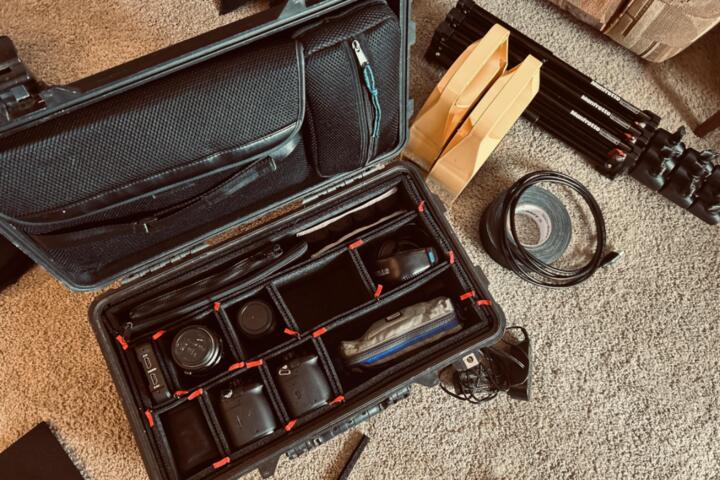
Expert travelers treat their gear as a mission-critical payload. This means using pressure-equalized hardshell cases, such as the Pelican 1510 or Nanuk 935, which are sized specifically for overhead bins. If the equipment must be checked, it requires custom-cut high-density polyethylene (HDPE) foam inserts that prevent internal component shifting, which is the primary cause of calibrated instrument failure during turbulence.
Critical Vulnerabilities
The most common mistake is the "Amateur’s Assumption": believing that a "Fragile" sticker provides protection. In reality, these stickers are often ignored by automated belt systems and can even signal to thieves that a bag contains high-value items. Relying on airline liability is another fatal error, as most carriers specifically exclude electronics, jewelry, and professional tools from their terms of service.
Consider the "TSA relock" failure. If an agent opens a case for inspection and fails to reseat the locking mechanism correctly, the case may fly across the ocean partially unsecured. Another pain point is the "Gate Check Trap." You arrive at the boarding gate with a carry-on full of glass lenses, only to be told the overhead bins are full. Without a "Plan B" (like a soft-shell insert that can be pulled out), your $20,000 kit is forced into the hold in a bag not designed for impact.
The consequences are rarely just the cost of the item. The true cost is the "Project Kill." If a specialized laser scanner arrives at a remote site in Chile with a cracked prism, the daily burn rate of the crew—often exceeding $10,000—continues while the project stalls. Real situations often involve lithium battery violations; if a Red Digital Cinema battery is incorrectly packed in checked luggage, the FAA can impose fines starting at $5,000 per violation.
Strategic Protection
To mitigate risk, you must adopt a multi-layered security protocol that starts weeks before the flight. This involves hardware selection, documentation, and specific check-in behaviors that shift the burden of care back onto the carrier and your insurance provider.
Custom High-Density Foam Shields
Never use "pluck and pull" foam for expensive gear; it degrades over time and loses structural integrity. Invest in custom CNC-cut foam from companies like MyCaseBuilder. This ensures each component—whether a Leica lens or a drone controller—has a 360-degree friction fit. In a drop test, custom foam can reduce G-force impact on internal electronics by up to 40% compared to generic padding.
Advanced Telemetry and Tracking
Standard GPS trackers like Apple AirTags are insufficient for high-value gear because they rely on the Find My network. For mission-critical assets, use the Sony VT-G100 or Tile Pro with a hidden secondary backup. Place the tracker deep inside the foam, not in an outer pocket. This allows you to confirm your gear is actually on the plane before the cabin door closes.
The Media Crew Declaration
If you are a professional, apply for a "Media Rate." Airlines like United and American Airlines offer significant discounts and higher weight limits for "Media Baggage." Crucially, this often involves a manual handling process. By declaring the items as professional tools of trade, you create a documented paper trail that is essential for insurance claims if things go wrong.
ATA Carnet for Global Transit
When flying internationally with expensive gear, the risk isn't just physical; it's legal. Customs officials may seize your equipment if they suspect you intend to sell it locally. An ATA Carnet, often called a "Passport for Goods," allows for duty-free and tax-free temporary import. Organizations like the USCIB provide these documents, which are recognized in over 80 countries.
Secondary Hard-Shell Enclosures
For the ultimate protection, use a "case-in-case" strategy. Place your sensitive equipment in a soft padded bag (like a Peak Design Camera Cube), then place that cube inside a hard-shell Pelican case. If you are forced to gate-check the hard case, you can pull the soft bag out and keep the most expensive components at your feet, even in a crowded cabin.
Internal Locking Mechanisms
TSA-approved locks are mandatory, but they are easily bypassed. Use cases with integrated stainless steel padlock holes. Use high-quality Abus or Master Lock TSA locks, but also add heavy-duty zip ties for checked gear. If the zip tie is broken upon arrival, you know immediately that the case was opened, allowing you to inspect the contents at the baggage office before leaving the airport.
Professional Case Studies
A boutique cinematography firm, "Apex Visuals," was flying from Los Angeles to Tokyo with $120,000 in Arri Alexa camera bodies. They utilized a "split-risk" strategy. Instead of packing all cameras in one large crate, they divided the sensors, glass, and media across four separate Pelican 1615 Air cases. When one case was delayed in Seoul, the team still had enough equipment to begin the first two days of the shoot using the secondary kits. This saved an estimated $30,000 in lost production time.
In another instance, a maritime engineering group needed to transport underwater ROVs to Dubai. They used custom-built flight cases with integrated shock sensors (SpotBot). During transit, a case was dropped from a height of five feet. The sensor logged the exact timestamp and G-force. Because the team checked the sensor at the airport, they successfully held the airline liable for a $12,000 internal calibration repair that would have otherwise been attributed to "normal wear and tear."
Safety Protocol
| Action Item | Target Risk | Professional Tool/Service |
|---|---|---|
| Structural Protection | Crushing, Drops, Vibration | Pelican Air, Nanuk, custom foam |
| Theft Prevention | Pilferage, Case Opening | TSA Padlocks + Industrial Zip Ties |
| Customs Compliance | Seizure, Import Taxes | ATA Carnet (Boomerang Carnets) |
| Financial Recovery | Total Loss, Damage | Inland Marine Insurance (Athos, Front Row) |
| Real-time Monitoring | Loss, Misrouting | Apple AirTag / Sony VT-G100 |
Common Travel Blunders
A frequent error is checking "Smart Luggage" with non-removable lithium batteries. If the battery cannot be removed, the airline will refuse the bag at the counter, or worse, the TSA will remove it and discard the bag. Always ensure your power banks are under 100Wh (Watt-hours) and kept in your carry-on luggage. If you have larger batteries (up to 160Wh), you must obtain prior airline approval, which many people forget until they are at the terminal.
Another mistake is failing to photograph the packing process. In a high-stakes insurance claim, you need "evidence of condition." Take a time-stamped video of the equipment being packed and the case being locked. Without this, an insurance adjuster may claim the damage was pre-existing or due to "insufficient packaging," a common clause used to deny expensive claims.
FAQ
Should I tell the airline how much my gear is worth?
Generally, no. Declaring a "high value" to the airline counter agent often triggers a "excess valuation" fee that is much more expensive and less comprehensive than private insurance. Instead, ensure your private policy (Inland Marine) specifically covers "scheduled items" during international transit.
Can I take lithium batteries in my checked luggage?
Absolutely not. Spare lithium-ion batteries are prohibited in the cargo hold due to fire risks. They must be in carry-on bags. Ensure the terminals are taped or isolated in individual bags to prevent short-circuiting, which can lead to confiscation by security.
What do I do if my case is damaged upon arrival?
Do not leave the airport. Go immediately to the airline's baggage service office and file a Property Irregularity Report (PIR). Take photos of the damage with the airport terminal in the background. This document is the "golden ticket" for both airline and private insurance claims.
Are TSA-approved locks actually secure?
They are secure against casual theft but can be opened by anyone with a TSA master key (which are widely copied). Use them to comply with regulations, but rely on heavy-duty hardshell cases and "discreet" packing—put your expensive Pelican case inside a cheap, oversized duffel bag to mask what it is.
Is travel insurance enough for pro equipment?
No. Standard travel insurance (like World Nomads or Allianz) usually has a "per-item" limit of $500–$1,000. For professional gear, you need an Inland Marine policy or a specific "Business Equipment" rider that covers the full replacement value without high deductibles.
Author’s Insight
After a decade of transporting specialized optical equipment through five continents, I have learned that the greatest risk is not the baggage handler, but the bureaucracy. I once had a $15,000 spectrometer held in Turkish customs for three weeks because I lacked a simple localized translation of the equipment's purpose. My best advice is to always carry a "Manifest Folder" in your hand. This folder should contain your Carnet, your insurance certificate, photos of every item, and a "Letter of Intent" on company letterhead. This level of preparation commands respect from officials and often bypasses the "random" inspections that lead to damaged gear.
Summary
Securing expensive equipment for air travel requires a shift from "traveler" to "logistics manager." By utilizing custom-molded protection, securing professional-grade insurance, and navigating customs with an ATA Carnet, you eliminate the variables that lead to equipment failure or loss. The most critical takeaway is to never rely on the airline's standard protections. Instead, build a self-contained system of security—physical, digital, and financial—that ensures your gear remains operational regardless of how it is handled in transit. Carry your sensors, pack your glass in hard-shells, and always have your documentation ready before you reach the check-in desk.