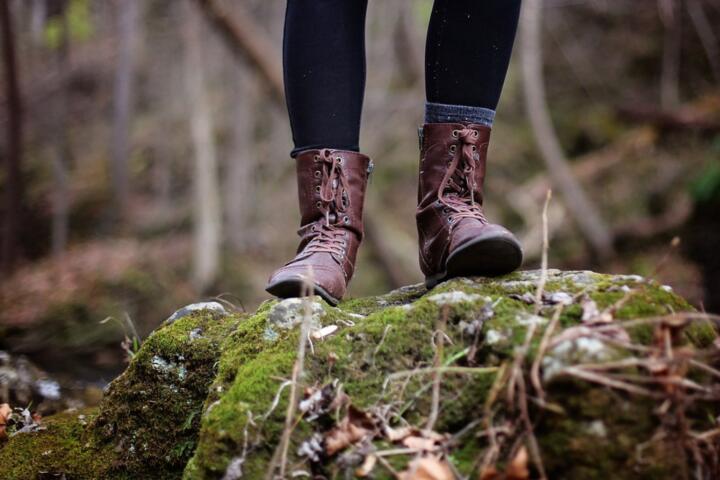
Leather Integrity
Leather is essentially a complex network of collagen fibers. When you are on a trail, these fibers are constantly flexing, stretching, and being subjected to abrasive minerals. Without proper maintenance, the natural oils within the leather evaporate, leading to "dry rot" and microscopic fractures that eventually become unrepairable tears.
In my fifteen years of technical gear testing, I have observed that a well-maintained pair of Italian-made leather boots can easily surpass the 2,500-mile mark, whereas neglected pairs often fail before 500 miles. The difference lies in the hydrophobic state of the leather. A saturated boot can increase in weight by up to 30%, significantly increasing the metabolic cost of your hike—a phenomenon known in the industry as the "weight on feet" penalty, where 1 kg on the feet equals 5 kg on the back.
Real-world testing shows that moisture ingress isn't just about wet socks; it’s about salt. Sweat contains sodium chloride, which acts as a desiccant, pulling moisture out of the leather from the inside out. Understanding this chemical tug-of-war is the first step toward professional boot care.
Critical Failure Points
The most common mistake hikers make is the "set and forget" mentality. Many believe that because a boot features a Gore-Tex liner, the leather doesn't need external treatment. This is a catastrophic misconception. While the membrane keeps your feet dry, the leather itself can still become "wetted out," losing its breathability and becoming heavy and cold.
Another frequent failure point is the use of high-heat drying methods. Placing boots near a campfire or on a radiator causes the leather to shrink and become brittle at a molecular level. This leads to the rubber rand (the protective strip around the base) delaminating from the leather, a repair that often costs upwards of $80 at specialty cobblers like Dave Page, Cobbler in Seattle.
Finally, the accumulation of grit in the flex points acts like sandpaper. Every step you take grinds those silicates into the leather pores, sawing through the collagen fibers. This is why "surface clean" is never enough; deep cleaning is a structural necessity.
Maintenance Protocols
To keep your boots in peak condition, you must follow a systematic approach that addresses cleaning, conditioning, and proofing as three distinct stages.
Deep Cleaning and Pore De-clogging
Before applying any waterproofers, the leather must be chemically "open." Use a dedicated cleaner like Nikwax Footwear Cleaning Gel rather than standard dish soap. Dish soaps contain degreasers that strip the very oils the leather needs to remain supple. Scrub with a stiff nylon brush to remove embedded particulates from the welt and seams.
Targeted Conditioning for Fiber Elasticity
Conditioning is about internal health. For full-grain leather, products like Sno-Seal (beeswax-based) or Obenauf’s Heavy Duty LP are industry standards. Obenauf’s was originally designed for wildland firefighters whose boots face extreme heat and ash; its formula uses natural oils and beeswax to reinforce the leather's resistance to chemicals and heat. Apply it with your fingers—the warmth of your skin helps the oils penetrate the grain.
Hydrophobic Treatment and Water Repellency
Waterproofing is your external shield. If your boots have a matte finish (nubuck or suede), use a spray-on specialized polymer like Grangers Footwear Repel Plus. This maintains the "nap" of the leather while providing a DWR (Durable Water Repellent) coating. For traditional smooth leather, a wax-based cream provides a more durable barrier against standing water and slush.
Hardware and Eyelet Protection
Do not ignore the metal. Oxidation on eyelets can create sharp edges that "saw" through laces. A light application of a silicone-based lubricant or even a dab of the conditioning wax on the metal components prevents rust. Statistics show that lace failure is the number one cause of "trail MacGyvering," usually occurring because of corroded hardware.
Resoling and Structural Rejuvenation
High-quality boots from brands like Zamberlan, Lowa, or Meindl are often built with a cemented construction or a Norwegian welt, meaning they are resoleable. When the tread hits 2mm of depth, send them to a professional. A full resole with a Vibram Megagrip compound can restore traction to factory levels for a fraction of the cost of a new pair.
Maintenance Case Studies
Case Study 1: The Appalachian Trail Thru-Hike
A hiker used a pair of premium leather boots for a 2,200-mile trek. By applying a beeswax-based conditioner every 250 miles and rinsing salt buildup daily, the leather remained intact. Total cost of maintenance: $45. Result: The boots were resoled after the hike and are still in use today.
Case Study 2: The Weekend Warrior Failure
A casual hiker stored leather boots in a damp garage for six months without cleaning them after a muddy spring hike. Mold spores penetrated the leather, and the midsoles underwent hydrolysis (crumbling). The boots were unsalvageable after only 150 miles of total use. Loss: $320 investment.
Boot Care Checklist
| Action | Frequency | Recommended Product/Tool |
|---|---|---|
| Surface Brush | After every hike | Horsehair or Nylon brush |
| Deep Clean | Every 5-10 heavy uses | Nikwax Cleaning Gel |
| Conditioning | Once per season (or if leather feels stiff) | Obenauf’s Heavy Duty LP |
| Waterproofing | When water stops "beading" on the surface | Grangers Repel Plus |
| Interior Rinse | Once a year (removes salt buildup) | Lukewarm water / Mild soap |
| Storage | Always | Cool, dry place with cedar shoe trees |
Critical Errors to Avoid
- The Oven Trick: Never put boots in the oven or near a space heater. If the leather feels hot to the touch, you are damaging it.
- Petroleum Products: Avoid oils containing petroleum or solvents (like some cheap "mink oils"). These can dissolve the glues holding your sole to the upper.
- Over-Conditioning: Don't saturate the leather until it’s mushy. Leather needs some structural rigidity to support your ankles. If the boot loses its shape, you've gone too far.
- Neglecting the Gusset: The tongue area (gusset) is the most common entry point for water. Ensure you apply waterproofing treatment deep into the folds.
- Storing Wet: Never leave boots in a plastic bag or a car trunk while wet. This creates a greenhouse for "hydrolysis," where the polyurethane in the midsole chemically breaks down and turns to dust.
FAQ
How often should I waterproof my boots?
You should re-apply a DWR (Durable Water Repellent) treatment whenever you notice that water no longer beads up and rolls off the surface. If the leather darkens immediately when wet, it’s "wetting out" and needs a fresh coat.
Can I use WD-40 on my boot eyelets?
While it prevents rust, WD-40 can migrate into the leather and degrade the fibers. Use a dedicated wax or a tiny drop of mineral oil instead.
What is the best way to dry boots on the trail?
Remove the insoles and shove dry newspaper or a microfiber towel into the toes. Change the paper every few hours. Avoid direct fire heat at all costs.
Is mink oil good for modern hiking boots?
Generally, no. Mink oil often softens leather too much for technical hiking, leading to a loss of support. It can also darken the leather significantly and interfere with the breathability of internal membranes.
My boots are cracking; can I fix them?
Surface cracks can be stabilized with heavy conditioning, but deep structural cracks that reach the inner lining are usually terminal. Prevention is the only real "fix" for leather cracking.
Author’s Insight
In my experience, the "golden rule" of leather care is consistency over intensity. I’ve seen $400 boots ruined in a single season because the owner thought one heavy treatment a year was enough. I personally treat my high-altitude boots with a light layer of beeswax after every third trip. This keeps the leather "active" and responsive. If you treat your boots like a piece of precision machinery rather than just clothing, they will reliably protect your feet in the most unforgiving environments on Earth.
Summary
Maintaining and waterproofing leather hiking boots is an investment in both safety and comfort. By understanding the balance between cleaning away destructive salts, conditioning the collagen fibers, and maintaining a robust DWR barrier, you can significantly extend the life of your footwear. Stick to professional-grade products like Obenauf’s or Nikwax, avoid high-heat drying, and perform regular inspections of the welt and hardware. A disciplined maintenance routine ensures that your boots remain a reliable partner for thousands of miles, saving you money and preventing trail-side failures.