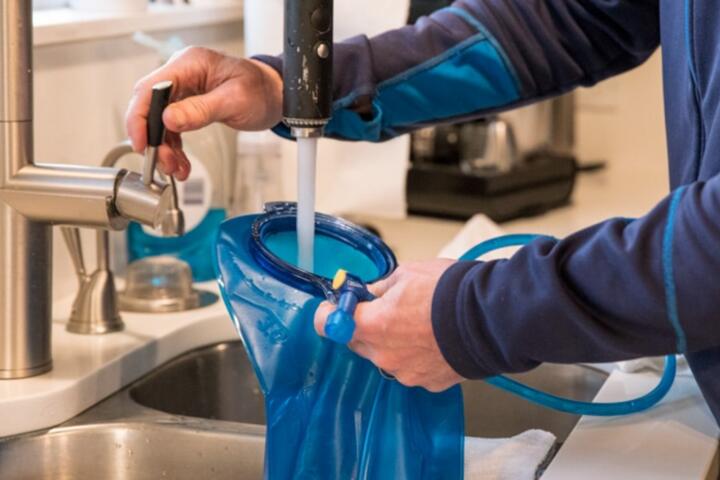
Biofilm Battle
A hydration reservoir is essentially a petri dish if not managed correctly. The combination of residual moisture, darkness, and skin contact creates an ideal environment for Pseudomonas aeruginosa and various fungi to thrive. Most users believe a quick rinse is sufficient, but microscopic biofilms—slimy layers of bacteria—adhere to the polyurethane walls within 24 to 48 hours of use.
In my years of ultra-endurance trail testing, I’ve seen reservoirs develop "black spots" in the tubing even when only filtered water was used. This happens because even the most advanced filters, like the Sawyer Squeeze or LifeStraw, don't remove 100% of organic matter, and your own backwash introduces sugars and bacteria into the system. Research suggests that an uncleaned bite valve can harbor more bacteria than a communal gym shower floor, making deep cleaning a health priority rather than just an aesthetic choice.
The Physics of Tubing
The primary challenge is the delivery hose. Standard hoses are roughly 1/4 inch (6.35 mm) in diameter and up to 36 inches long. Surface tension keeps water trapped in these narrow corridors, preventing evaporation. Without mechanical agitation or a chemical breakdown agent, the interior of the tube remains damp indefinitely, leading to inevitable mold growth.
Cleaning Protocols
Utilizing the Power of Sodium Bicarbonate
Baking soda is a mild abrasive and a natural deodorizer. It effectively neutralizes the acidic environment that many fungi prefer. To use this effectively, mix two tablespoons of baking soda with one liter of warm water. Pour it into the reservoir, shake vigorously, and—critically—pinch the bite valve to let the solution fill the entire length of the hose. Let it sit for 30 minutes before rinsing.
Vinegar as a Descaling Agent
White vinegar (acetic acid) is the gold standard for removing hard water scales and breaking down mineral buildup around the connector seals. Use a 1:4 ratio of vinegar to water. This is particularly effective for users in regions with high mineral content in their tap water. The acetic acid dissolves the calcium carbonate bonds that keep the "plastic taste" locked into the reservoir walls.
The "Dry Rice" Mechanical Hack
When you don't have a long-handled brush, use uncooked rice as a mechanical agitator. Add a handful of dry rice and a small amount of soapy water to the reservoir. Inflate the bladder slightly with air, seal it, and shake it like a cocktail shaker. The rice grains act as thousands of tiny scrubbers, knocking loose the biofilm from the corners and baffles without scratching the TPU (Thermoplastic Polyurethane).
Freezer Storage for Microbial Inhibition
One of the most effective "hacks" used by professional mountain guides is the freezer method. After a basic wash, shake out the excess water and place the entire system (reservoir and hose) into the freezer. Bacteria cannot reproduce in sub-zero temperatures. This effectively "pauses" any biological growth between weekend trips, though it does not replace a deep clean.
The Paper Towel "Snake" Technique
To dry the hose without a specialized dryer, take a small piece of paper towel, tie it to a weighted string (like a fishing line or a heavy thread), and pull it through the tube. Alternatively, use a "snake" made of a thin, clean rag. Removing that internal moisture is the single most important step in preventing the "black gunk" that ruins most hydration systems.
Bleach: The Nuclear Option
If you already see black mold, you need a disinfectant. Use regular, unscented household bleach. The ratio is critical: 2 to 5 drops per liter of water. Do not exceed this, as high concentrations can degrade the plastic and irritate your throat. Circulate the solution through the hose and let it sit for 20 minutes. Rinse until the chlorine smell is completely gone. This is the only method that effectively kills Staphylococcus spores.
Real-World Case Studies
Case Study 1: The Appalachian Trail Thru-Hiker
A hiker on the 2,190-mile Appalachian Trail reported persistent "swampy" tasting water after two months. They had no access to a cleaning kit. By switching to a weekly "Rice and Vinegar" shake at town stops and using a DIY wire-hanger drying rack, they eliminated the odor. The hiker reported that the reservoir remained clear for the final 1,200 miles, saving the $40 cost of a replacement bladder.
Case Study 2: The Adventure Racing Team
A competitive team using Source Tactical bladders struggled with sticky residue from high-carb fuel mixes. They implemented a post-race protocol using Efferdent (denture cleaning tablets). By dropping two tablets into the reservoir with warm water, they used the effervescent action to reach the internal baffles that brushes often miss. Their equipment lifespan increased from one season to three, reducing their annual gear overhead by 65%.
Comparing Cleaning Agents
| Method | Best For | Effectiveness | Cost per Clean |
|---|---|---|---|
| Baking Soda | Odor removal | High (Biofilm) | < $0.05 |
| White Vinegar | Mineral deposits | High (Scaling) | < $0.10 |
| Denture Tablets | Hard-to-reach areas | Moderate | $0.20 |
| Rice Agitation | Physical scrubbing | High (Mechanical) | < $0.02 |
| Lemon Juice | Light freshness | Low | $0.30 |
Common Pitfalls
One major error is using boiling water. Most hydration bladders are rated for temperatures up to 60°C (140°F). Using boiling water can warp the seals and delaminate the plastic layers, leading to catastrophic failure under pressure. Always use "hand-hot" water—if it’s too hot to touch, it’s too hot for the bladder.
Another mistake is using dish soap with heavy perfumes or "moisturizing" agents. These often leave a soapy film that is harder to wash out than the original mold. Use a simple, clear dish soap like Dawn Free & Clear or a dedicated technical wash.
Finally, never store your bladder folded while damp. The plastic can "stick" to itself, creating anaerobic pockets where bacteria thrive. If you don't have a drying rack, use a kitchen whisk or a clean plastic coat hanger inserted into the bladder to keep the walls apart and allow airflow.
FAQ
Can I put my hydration bladder in the dishwasher?
Generally, no. The high heat of the drying cycle can melt the seams or damage the hose connectors. Some brands like HydraPak claim to be dishwasher safe (top rack only), but for maximum longevity, manual cleaning is always superior.
How do I get the "plastic taste" out of a new reservoir?
Fill the reservoir with a mixture of lemon juice and water, freeze it halfway, shake it, and let it thaw. The citric acid reacts with the surface molecules of the plastic to neutralize the manufacturing odors.
How often should I deep clean my system?
If using only water, a deep clean every 2–4 weeks is sufficient. If using electrolyte mixes or "recovery" drinks, you must perform a cleaning protocol within 24 hours of use.
What should I do if the hose is already full of black mold?
If the mold has penetrated the plastic (staining it), it is safer to replace the hose. Most hoses are universal 1/4 inch sizes and can be bought at hardware stores or gear shops like REI for under $10.
Is it safe to use mouthwash for cleaning?
In a pinch, yes. Alcohol-based mouthwash acts as a disinfectant and leaves a minty scent. However, it is an expensive way to clean and doesn't provide the mechanical scrubbing needed for biofilms.
Author’s Insight
In my fifteen years of backcountry trekking, I’ve found that the best cleaning tool isn't a brush—it's prevention. I always carry a dedicated "dirty" bottle for electrolytes and keep only pure, filtered water in my reservoir. This simple habit eliminates 90% of cleaning headaches. If you do end up with a mess, don't rush the drying process; a reservoir that looks dry often still has moisture in the "Quick Link" valves. Give it an extra 12 hours of air-drying time before sealing it up.
Summary
Maintaining a hydration bladder doesn't require a specialized $25 cleaning kit. By utilizing the chemical properties of white vinegar, the deodorizing power of baking soda, and the mechanical agitation of dry rice, you can achieve a laboratory-grade clean with household staples. The key to success lies in the details: drying the hose thoroughly and ensuring the bite valve is disassembled. Implement these techniques today to ensure your next adventure is fueled by clean, safe, and refreshing water.