Ecosystem Understanding
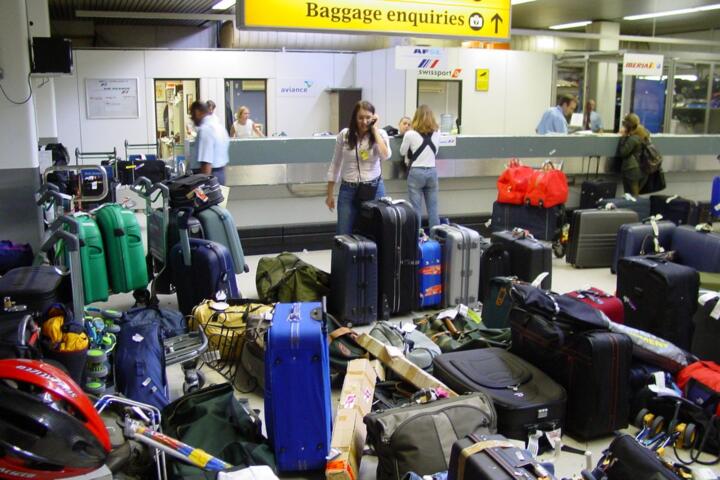
The aviation industry handles over 4 billion bags annually, and while the "mishandled baggage" rate has dropped significantly thanks to RFID tracking, approximately 0.6% to 0.7% of items still go missing. In practical terms, for a professional photographer flying from London to Tokyo with a Pelicase 1510, there is a statistical reality that technical gear might be offloaded due to weight distribution or misrouted during a tight connection at a hub like Dubai or Frankfurt.
I recall a case where a cinematography crew lost three lighting arrays during a transit in Charles de Gaulle. The issue wasn't the loss itself, but the "invisible" status of the gear because it was checked as "oversized." Real-world data from SITA suggests that 80% of lost items are delayed rather than permanently lost, but for a professional on a deadline, a 48-hour delay is equivalent to a total loss. Understanding the difference between a "Delayed Baggage Report" and a "Property Irregularity Report" (PIR) is the first step in expert-level recovery.
Common Recovery Pitfalls
The most significant mistake travelers make is leaving the airport without a physical PIR. Many passengers trust verbal assurances from ground staff or attempt to file reports online later. This is a critical failure because the legal clock for compensation under the Montreal Convention starts the moment you land. Without a PIR number, proving the item was in the airline's custody becomes a bureaucratic nightmare involving weeks of security footage reviews.
Another pain point is the undervaluation of specialized equipment. Airlines often cap liability at approximately $1,700 (1,288 Special Drawing Rights) for international flights. If your RED camera or custom carbon-fiber bike is worth $15,000, relying solely on airline liability is a recipe for financial disaster. Travelers frequently fail to document the contents of their hard-shell cases, leaving them with no "proof of kit" when filing insurance claims, leading to denied payouts or significantly reduced settlements.
Recovery Strategies
Immediate On-Site Protocol
The moment you realize your gear hasn't appeared on the carousel, head to the baggage service desk—not the main check-in counter. Demand a Property Irregularity Report (PIR). This document is your most important asset. Ensure the agent records the specific make and model of your protective case (e.g., "Silver Rimowa Topas" or "Black Pelican 1650"). This specificity helps baggage handlers identify the item in "purgatory" areas more quickly than a generic "black suitcase" description.
Leveraging Digital Tracking
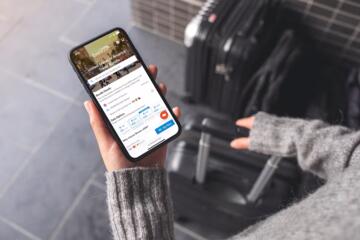
Internal airline systems like WorldTracer are standard, but you should augment this with personal telemetry. Using an Apple AirTag or Tile Pro inside a Faraday-shielded pocket of your gear case allows you to see if your equipment is still at the departure gate or sitting in a transit warehouse. I have seen professionals show their iPhone screen to airline managers, proving their gear is in Terminal 3, which forced a manual ramp search that recovered the items in under an hour.
Invoking the Montreal Convention
For international travel, the Montreal Convention is your legal shield. It dictates that airlines are liable for proven damages up to a certain limit. If your gear is delayed, the airline must reimburse "reasonable" expenses. For a professional, this could include the rental of equivalent gear (e.g., a Sony A7R V body) to continue a shoot. Keep every receipt. Do not accept travel vouchers; demand cash or bank transfers, as is your right under the treaty guidelines.
The Role of Specialized Insurance
Standard travel insurance is often insufficient for high-end gear. Expert travelers use "Inland Marine" riders or specialized equipment insurance from providers like Front Row Insurance or Athos. These policies cover "replacement cost" rather than "actual cash value," meaning you get enough to buy a new item, not just the depreciated value of a three-year-old lens. Mentioning that your gear is professionally insured often prompts airline adjusters to settle more quickly to avoid subrogation.
Escalation through Social Channels
If 24 hours pass without an update, move your inquiry to public-facing platforms. Airlines prioritize social media queries to avoid public relations damage. Tagging the airline with your PIR number and a photo of the empty carousel often results in a "Priority Trace." Platforms like X (formerly Twitter) are monitored by dedicated digital response teams who have higher clearance than standard phone support agents to expedite warehouse searches.
Utilizing Third-Party Recovery
Services like Blue Ribbon Bags offer a specialized layer of protection. For a small fee (usually $5-$10), they promise to track and expedite the return of your bags. If they fail to return the gear within 96 hours, they pay a fixed satisfaction guarantee (often $1,000) that is independent of any airline compensation. This is a "double-dip" strategy that provides immediate liquidity while you wait for the larger insurance or airline settlement.
Success Stories
In 2023, a boutique architectural photography firm traveled from New York to Berlin via Lufthansa. Their primary kit, valued at $22,000, disappeared. The team had recorded a 30-second video of the case being packed and weighed. By presenting the PIR, the GPS coordinates from an AirTag, and the video evidence to the Lufthansa Senator Service desk, they bypassed the standard 21-day "wait and see" period. Lufthansa authorized a $2,500 local rental credit within 6 hours, allowing the shoot to proceed. The original gear was recovered 4 days later in Munich.
Another case involved a professional cyclist whose custom Pinarello was lost by a major US carrier. Because the cyclist had a "Declaration of Value" on file (a specific airline form where you pay an extra fee to increase liability limits), the airline was forced to settle for the full $8,000 value within 14 days, rather than the standard $3,800 domestic cap. This highlights the importance of the "Excess Valuation" protocol for items exceeding standard limits.
Protection Matrix
| Protection Layer | Cost Level | Primary Benefit | Recommended For |
|---|---|---|---|
| Montreal Convention | Free (Legal) | Baseline legal liability | All international travelers |
| Apple AirTag / Tile | $25 - $30 | Real-time location data | High-value technical kits |
| Excess Valuation | $10 per $1k | Increases airline payout cap | Items $2k - $5k |
| Specialized Policy | $200+ / year | Full replacement coverage | Full-time professionals |
| Blue Ribbon Bags | $5 per trip | Expedited tracking/fixed cash | Frequent flyers |
Loss Misconceptions
The most dangerous myth is that "fragile" stickers provide extra security. In reality, these stickers are often ignored by automated sorting systems. Instead of stickers, invest in TSA-approved locks that show an indicator if they have been opened. Many people also assume that if a bag is lost on a codeshare flight (e.g., booked through Delta but flown by KLM), they should contact the booking airline. This is incorrect. You must always file the claim with the last carrier that flew you to your destination.
Avoid putting all your critical components in one checked case. Always split your kit. If you have two camera bodies, carry one on the plane. If you are a musician, carry your mouthpiece or pedals in your hand luggage. This "redundancy principle" ensures that even if the airline loses your main case, you aren't completely incapacitated. Failing to have a "minimal viable kit" in your carry-on is the hallmark of an amateur traveler.
FAQ
How long do I have to file a claim?
For damaged gear, you must file within 7 days. For delayed or lost gear, you must file a written claim within 21 days of the date the item was (or should have been) delivered. Missing these deadlines usually forfeits your right to compensation.
Does the airline pay for gear rentals?
Yes, but you must prove the necessity. If you are a professional on a documented assignment, airlines are generally required to cover rental costs to "mitigate your loss," provided the costs are reasonable and documented with receipts.
What if my gear is stolen from the case?
This is a "pilferage" claim. You must file a police report at the airport in addition to the airline PIR. This creates a secondary paper trail that is essential for insurance claims regarding "mysterious disappearance."
Is "Actual Cash Value" enough for my gear?
Rarely. ACV subtracts depreciation. A 5-year-old professional lens might be valued at 40% of its cost. Ensure your personal insurance policy is "Replacement Cost Value" (RCV) to avoid this gap.
Can I refuse to check my gear at the gate?
If the overhead bins are full, you can request a "Gate Check" which usually means the bag is placed in the hold but returned at the jet bridge upon arrival. This is much safer than checking it through to the final destination carousel.
Author’s Insight
In my fifteen years of traveling with sensitive telemetry equipment, I have learned that the airline is not your friend, but the baggage desk agent can be your greatest ally. I always carry a printed "Manifest of Contents" with serial numbers and photos in my carry-on. On two occasions, showing this organized folder to a supervisor transformed me from a "complaining passenger" to a "professional with a documented loss," which significantly fast-tracked my recovery. My top advice: never fly without an AirTag and never leave the airport without a physical, signed copy of your PIR.
Summary
Recovering lost gear requires a blend of immediate action, digital surveillance, and an understanding of international law. By securing a PIR immediately, using independent tracking devices, and understanding the liability limits of the Montreal Convention, you turn a potential career disaster into a manageable delay. Always document your equipment before arrival and maintain a secondary insurance policy for high-value items. Taking these specific steps ensures that even if your gear goes missing, your project or trip stays on track.